



Warehouses and factories carry different fire risks compared with offices, retail stores or small commercial premises. These sites often combine stock storage, electrical systems, machinery, forklifts, packaging materials, flammable liquids, vehicle access points and staff movement in one operational space.
Effective extinguisher planning is not only about placing units on walls. It requires a clear review of fire risks by area, the materials stored on site, the machinery being used, access routes, staff visibility and the likely fire classes present in each zone.
For businesses reviewing Fire Extinguisher Perth requirements, warehouse and factory planning should focus on practical placement, correct extinguisher types, compliant signage, staff access and regular servicing.
Why Fire Extinguisher Planning Matters in Warehouses & Factories
Industrial and storage environments can change frequently. Stock levels increase, racking layouts move, machinery is upgraded, loading areas expand and temporary storage may appear during busy periods.
This creates fire safety challenges because extinguishers that were once visible and accessible can become blocked by pallets, cartons, mobile equipment or parked vehicles. A well-planned extinguisher layout supports faster response during the early stages of a fire, while also helping staff identify the correct unit for the hazard.
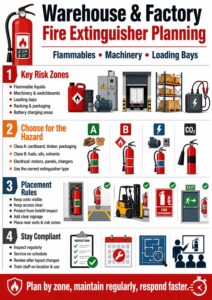
Fire extinguisher planning should account for:
- Flammable liquids, fuels, solvents, paints and aerosols
- Cardboard, timber pallets, plastic wrapping and packaging waste
- Electrical switchboards, charging stations and control panels
- Conveyor systems, manufacturing equipment and production machinery
- Forklift routes, loading docks and dispatch areas
- Staff access paths, exits and emergency assembly routes
Each area needs to be assessed based on the specific fire risk, not treated as one general zone.
Understanding Fire Classes in Industrial Sites
Warehouse and factory fires may involve several fire classes. Selecting the wrong extinguisher can reduce response effectiveness and may increase risk.
Common fire classes in these environments include:
Class A fires – ordinary combustibles such as cardboard, paper, timber pallets, plastic packaging and general stock.
Class B fires – flammable liquids such as petrol, solvents, oils, paints, chemicals and cleaning products.
Class C fires – flammable gases where gas cylinders, LPG equipment or industrial gases are stored or used.
Class E fires – energised electrical equipment such as switchboards, motors, machinery controls, chargers and electrical panels.
Class F fires – cooking oils and fats, usually relevant if the facility includes a commercial kitchen or staff food preparation area.
A fire extinguisher plan should match the extinguisher rating to the hazard. For example, a machinery zone may require dry chemical powder or CO₂ units depending on the equipment and risk profile, while a flammable liquid storage area may require extinguishers rated for Class B fires.
Planning for Flammable Liquids & Chemical Storage
Flammable liquids need specific attention because they can ignite quickly, spread across surfaces and produce vapours that increase fire risk. In warehouses and factories, these materials may include fuel, oil, thinners, adhesives, cleaning chemicals, lubricants, resins and paint products.
Extinguisher planning for flammable storage areas should consider:
- The quantity of flammable liquids stored
- Whether liquids are stored in approved cabinets or dedicated areas
- Ventilation and separation from ignition sources
- Proximity to electrical equipment, hot work zones and machinery
- Clear access for staff and emergency responders
- Signage that remains visible when stock levels change
Dry chemical powder extinguishers are commonly used across many industrial fire risks, while foam extinguishers may be suitable for certain liquid hazards. The correct selection should be based on the type of liquid, site layout and applicable safety requirements.
Businesses should avoid placing extinguishers too close to the hazard where staff may be forced to approach the fire to access the unit. Placement should support safe retrieval from an accessible route.
Machinery Areas: Electrical, Heat & Friction Risks
Production machinery, conveyors, motors, compressors and automated systems can create fire risks through electrical faults, overheating, friction, dust build-up, poor maintenance or material jams.
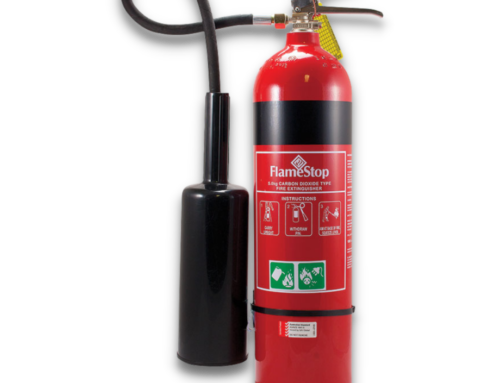
Machinery zones may require extinguishers suitable for electrical and general combustible risks. CO₂ extinguishers are often considered for electrical equipment because they leave no residue, while dry chemical powder units may be used where broader fire classes are present.
Planning should consider:
- Machine control panels and isolators
- Electrical motors and switchboards
- Conveyor belts and moving parts
- Dust or lint build-up near machinery
- Hydraulic oils, lubricants and nearby packaging materials
- Access around equipment during operation
- Emergency shutdown points
Fire extinguishers should be positioned so staff can access them without entering restricted machinery zones or moving through unsafe areas. Where machinery creates noise, heat or limited visibility, signage becomes especially important.
Fire Extinguisher Perth
Loading Bays & Dispatch Areas
Loading bays are high-traffic areas where vehicles, forklifts, pallets, packaging, diesel equipment and electrical charging systems may operate close together. These zones can become cluttered during dispatch peaks, making extinguisher access a key concern.
Risks in loading bays may include:
- Forklift impact damage
- Vehicle fuel or oil leaks
- Cardboard and plastic packaging accumulation
- Battery charging equipment
- Obstructed walls and access points
- Temporary stock holding near exits
Extinguishers in loading bay areas should be protected from physical damage, clearly signed and located where staff can reach them quickly. In some cases, cabinets or protective brackets may be required to prevent damage from forklifts, pallet jacks or vehicle movement.
Loading dock layouts should be reviewed regularly, especially where seasonal demand changes stock volume and pallet movement.
Racking, Pallet Storage & Packaging Waste
Warehouse storage areas often contain high volumes of combustible materials. Cardboard cartons, timber pallets, shrink wrap, plastic strapping and paper-based packaging can increase the fire load of a building.
Extinguisher planning around racking should focus on visibility and access. A unit fixed behind stacked pallets provides limited practical value. Extinguishers should be positioned along walkways, near exits, at key transition points and close enough to risk zones without being hidden by stock.
Key planning points include:
- Keep extinguisher locations clear of pallets and loose stock
- Avoid placing units behind movable storage
- Use signage visible above racking or equipment where needed
- Review placement after racking changes
- Keep walkways clear for evacuation and emergency access
- Manage waste packaging through scheduled removal
Extinguishers are only one part of a fire safety strategy. Good housekeeping, waste control and clear access routes support safer warehouse operations.
Forklift Charging & Battery Areas
Forklift charging stations can create specific risks depending on the battery type, charging setup and ventilation. These areas may include electrical hazards, heat, impact risks and, in some cases, gases released during charging.
Extinguisher planning for charging zones should account for:
- Electrical equipment
- Nearby combustible packaging
- Ventilation
- Clear separation from flammable storage
- Protection from forklift impact
- Emergency isolation points
- Staff access during charging periods
The extinguisher type should match the risk profile of the charging area. Signage should also make it clear that charging stations are controlled zones, not temporary storage areas.
Placement, Signage & Accessibility
A compliant fire extinguisher layout must allow staff to identify and access units quickly. In large warehouses and factories, visibility can be reduced by racking, machinery, stock movement, doors, partitions and vehicle traffic.
Effective placement should support:
- Clear line of sight where possible
- Signage above each extinguisher location
- Access from normal staff movement paths
- Protection from impact damage
- Placement near exits or escape routes where suitable
- Matching extinguisher types to nearby hazards
- Regular checks to confirm units are not blocked
Fire extinguisher signs should remain visible even when stock levels change. Where walls are not suitable, pedestal stands, cabinets or dedicated mounting points may be needed.
Businesses sourcing Fire safety equipment Perth should ensure extinguishers, signage, brackets, cabinets and related equipment are selected as part of one planned layout rather than purchased as separate items without a site review.
Servicing & Inspection Requirements
Warehouses and factories should not rely on installation alone. Extinguishers need scheduled inspection and maintenance to confirm they remain charged, accessible, correctly labelled and suitable for the area.
Regular reviews should check:
- Pressure gauge condition
- Hose and nozzle condition
- Tamper seals
- Mounting brackets
- Signage visibility
- Service tags
- Access clearance
- Damage from forklifts, stock or weather exposure
- Whether the surrounding hazard has changed
Industrial sites should also review extinguisher planning after layout changes, equipment upgrades, new stock categories, changes to chemical storage or expansion of loading bay operations.
Staff Awareness & Site-Specific Training
Extinguishers are only effective when staff know where they are, what type they are and when they should or should not be used. Warehouse and factory workers should understand basic extinguisher identification, evacuation priority and internal reporting procedures.
Staff awareness should cover:
- Location of extinguishers in their work area
- Difference between fire classes
- When to evacuate instead of attempting first response
- How to report blocked or damaged extinguishers
- Site rules for flammable storage and waste control
- Emergency exits and assembly points
Training should be practical and relevant to the site. A forklift operator, machine operator, warehouse picker and maintenance worker may each face different hazards during normal duties.
Common Fire Extinguisher Planning Mistakes
Many industrial sites have extinguishers installed but still face planning gaps. Common issues include:
- Extinguishers blocked by pallets or equipment
- Incorrect extinguisher type near a specific hazard
- Units installed too far from high-risk areas
- Poor signage in large storage zones
- Loading bay extinguishers damaged by vehicles
- No review after machinery or racking changes
- Fire equipment treated as a once-off purchase
- Staff unaware of extinguisher locations
These gaps can reduce response time and create avoidable compliance risks.
Building a Practical Fire Safety Equipment Plan
A practical warehouse or factory fire safety plan should start with a site-specific risk review. This includes identifying flammables, machinery risks, electrical systems, charging areas, loading bays, combustible stock and staff access routes.
A complete plan may include:
- Portable fire extinguishers
- Fire blankets where applicable
- Hose reels where required
- Fire extinguisher signage
- Cabinets or protective covers
- Emergency exit signage
- Evacuation diagrams
- Inspection schedules
- Staff awareness training
- Ongoing review after layout changes
A planned approach to Fire safety equipment Perth helps businesses maintain safer work areas while supporting compliance across storage, production and dispatch operations.
Conclusion
Warehouses and factories need fire extinguisher planning that reflects real site risks. Flammable liquids, machinery, electrical systems, battery charging, combustible packaging and loading bay activity all influence what extinguishers are needed and where they should be placed.
A well-designed plan supports visibility, access, correct extinguisher selection and ongoing maintenance. For businesses reviewing Fire Extinguisher Perth solutions, the focus should be on matching each unit to the hazard, keeping equipment accessible and reviewing the layout whenever operations change.
With the right extinguisher placement, signage and servicing schedule, warehouses and factories can improve workplace safety, reduce response delays and maintain a more reliable fire protection strategy.

Leave A Comment