


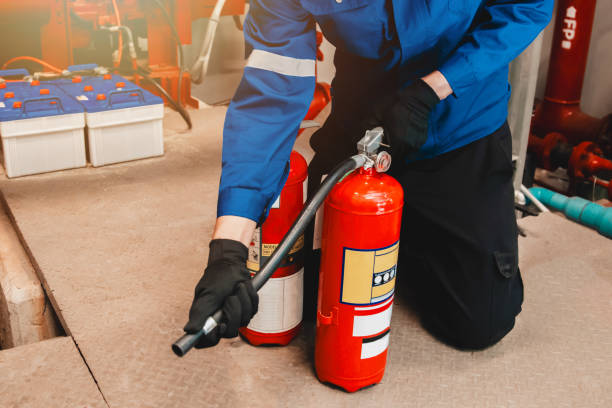
For property owners, facility managers, workshops, warehouses, offices, retail stores & hospitality venues, choosing the right extinguisher is not simply a matter of buying one unit that appears to cover every situation. Multi-purpose extinguishers can play a valuable role in fire preparation, but they can also create risk when they are used as a substitute for a proper fire-risk assessment. This is especially relevant when selecting Fire extinguishers Perth businesses rely on for commercial, industrial, retail & residential sites.
Australian guidance makes it clear that different extinguishers are designed for different fire sources, & that using the wrong extinguisher can increase danger. Queensland Fire & Emergency Services states that the correct extinguisher must be used for the fire involved, while Fire & Rescue NSW notes that extinguisher distribution should match the hazard present in the area being protected.
What Is a Multi-Purpose Extinguisher?
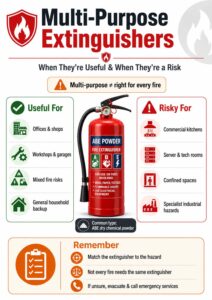
A multi-purpose extinguisher is designed to cover more than one fire class. In Australia, the most common example is an ABE dry chemical powder extinguisher, often identified by a white band. It is commonly used because it can address a wide range of common fire risks, including ordinary combustibles, flammable liquids, flammable gases & fires involving energised electrical equipment.
This makes it a practical inclusion in many homes, offices, vehicles, sheds, plant rooms, storage areas & mixed-use commercial spaces. For suppliers of fire safety products Perth customers depend on, ABE powder units are often part of a broader fire protection setup rather than the only solution.
When Multi-Purpose Extinguishers Are Useful
1. Mixed-Risk Areas
A multi-purpose extinguisher is useful where several fire risks exist in the same general area. For example, a workshop may contain cardboard packaging, electrical equipment, oils, cleaning liquids & small machinery. In this type of environment, one extinguisher type may not cover every likely ignition source, so an ABE powder extinguisher can provide flexible first-response coverage.
2. Small Offices & General Commercial Spaces
In offices, many potential fires involve paper, furniture, electrical appliances, power boards, computers & small equipment. ABE powder extinguishers can be suitable for a broad range of these risks, particularly where staff need a recognisable first-response option before evacuation or emergency services arrive.
However, suitability still depends on placement, signage, maintenance & staff awareness. Fire & Rescue NSW states that extinguishers should be conspicuous, readily accessible, clearly signed & selected according to the hazard present.
3. Vehicles, Garages & Storage Areas
Garages, utility vehicles, mobile service vans & storage areas can contain fuel, tools, batteries, packaging & electrical equipment. A multi-purpose extinguisher may be useful in these environments because the fire source may not be immediately obvious in the first few seconds.
For example, a small fire near a tool charger, fuel container or storage shelf may involve more than one material type. A broad-use extinguisher can give the operator a safer first-response option, provided the fire is small, the exit path is clear & the user is not exposed to unacceptable risk.
4. Residential Backup Protection
In homes, a dry chemical powder unit is often used as a general-purpose option for small fires. Queensland Fire & Emergency Services notes that dry chemical powder AB(E) extinguishers are suitable for most household fires due to their effectiveness across multiple fire types. The same guidance also advises that extinguishers should be stored where they are easy to access but away from areas likely to catch fire.
When Multi-Purpose Extinguishers Become a Risk
1. Commercial Kitchens
A multi-purpose extinguisher should not automatically be relied on for cooking oil & fat fires. Class F fires require specific consideration because hot oils can reignite, splash or spread when the wrong extinguishing agent is used. Wet chemical extinguishers are designed for this type of hazard & are commonly used in commercial kitchens.
Using the wrong extinguisher in a kitchen can create a safety risk for staff & customers. A site with fryers, cooking oils, exhaust canopies & food preparation equipment should be assessed for wet chemical extinguishers, fire blankets & suitable kitchen fire safety equipment.
2. Sensitive Electrical & Technology Areas
ABE powder can be used on fires involving energised electrical equipment, but it can also leave residue. In server rooms, communications rooms, control rooms, medical settings or areas with sensitive electronics, powder discharge may create equipment contamination, downtime & clean-up issues.
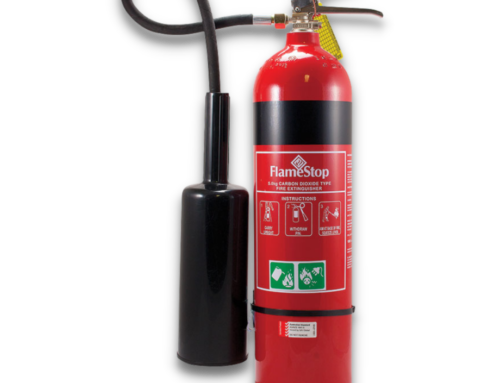
In these spaces, CO₂ extinguishers are often considered because they leave no powder residue. This does not mean CO₂ is always the only answer, but it does show why a multi-purpose unit may not be the most suitable option for every electrical-risk area.
3. Confined Spaces
Powder discharge can reduce visibility, irritate breathing & make evacuation more difficult in a confined area. CO₂ also requires caution in confined spaces because it can displace oxygen. Western Australia’s Department of Transport notes that carbon dioxide can be dangerous & cause suffocation in a confined space, which reinforces the need to match extinguisher choice to the environment, not just the fire class.
4. Specialist Industrial Hazards
Multi-purpose units are not designed for every industrial hazard. Metal fires, chemical risks, high-voltage environments, flammable liquid storage, spray booths, laboratories & manufacturing areas may require specialist extinguishers, spill control, fixed systems, signage & documented fire procedures.
Class D combustible metal fires, for example, require special powder. Fire & Rescue NSW lists special powder for metal fires, showing why a general-purpose extinguisher is not suitable for every workplace hazard.
Fire extinguisher Perth
Why “One Extinguisher Does Everything” Is the Wrong Approach
The phrase “multi-purpose” can be misleading. It means suitable for multiple fire classes, not suitable for every site, every fuel, every room or every business. Fire safety requires matching the extinguisher to the likely fuel source, location, user access, evacuation route & operational risk.
AS 2444-2001 covers the selection & location of portable extinguishers & fire blankets, including criteria for application, location & distribution. In Western Australia, the Australian Business Licence & Information Service notes that this standard sets out criteria for selection, application, location & distribution.
Practical Examples
Office Reception Area
A multi-purpose extinguisher may be suitable where the likely risks include paper, furniture, small appliances & power boards. Clear signage, correct mounting & accessible positioning remain important.
Commercial Kitchen
A multi-purpose extinguisher should not replace a wet chemical unit where cooking oils & deep fryers are present. The kitchen should be assessed for Class F risks.
Warehouse
ABE powder may be useful for mixed packaging, pallets, electrical equipment & small machinery risks. However, battery charging areas, flammable liquid stores or chemical zones may require different extinguishers.
Server Room
A powder extinguisher may control some fire risks, but residue can damage equipment. CO₂ or other suitable systems may be considered depending on the room, equipment & compliance requirements.
Maintenance & Staff Awareness
An extinguisher is only useful if it is accessible, charged, maintained & understood by the people expected to use it. Queensland Fire & Emergency Services advises checking the pressure gauge, ensuring regular maintenance, following manufacturer instructions & leaving immediately to call Triple Zero if safety is a concern.
For businesses, routine checks should include:
- Correct extinguisher type for the hazard
- Clear signage & unobstructed access
- Pressure gauge condition
- Damage, corrosion or missing safety pins
- Service tags & inspection records
- Staff awareness of when not to use an extinguisher
Choosing the Right Fire Protection Setup
The right extinguisher setup may include multi-purpose powder units, CO₂ extinguishers, wet chemical extinguishers, foam extinguishers, fire blankets, signage, brackets, cabinets & service records. The correct mix depends on the building, the activities carried out, the materials stored & the people using the space.
Businesses sourcing Fire extinguishers Perth wide should avoid choosing units based only on price or convenience. A site-specific review helps ensure extinguishers are selected for real fire risks rather than assumed hazards.
Final Takeaway
Multi-purpose extinguishers are useful because they provide flexible first-response coverage across several common fire classes. They are practical for many homes, offices, vehicles, garages, workshops & general commercial areas. However, they become a risk when they are treated as a universal solution.
For commercial kitchens, sensitive electrical rooms, confined spaces, industrial sites & specialist hazards, the correct extinguisher type matters. By choosing suitable fire safety products Perth businesses can improve safety, support compliance & reduce the risk of using the wrong equipment during an emergency.


Leave A Comment