



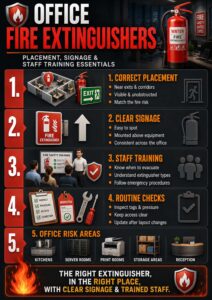
Office fire safety depends on more than having extinguishers on site. Correct placement, visible signage, staff awareness, routine maintenance & emergency planning all work together to reduce risk. For Perth offices, Fire Extinguishers Perth should be selected, installed & maintained with workplace layout, occupancy, fire risks & evacuation paths in mind.
Why Office Fire Extinguisher Planning Matters
An office may appear low-risk compared with industrial or workshop environments, but common workplace hazards still create fire exposure. Electrical equipment, overloaded power boards, kitchen appliances, server cupboards, paper storage, cleaning chemicals & shared breakout areas can all contribute to fire risk.
A well-planned office fire safety setup helps staff identify equipment quickly, respond safely where appropriate & evacuate without delay. Safe Work Australia notes that workplace emergency plans should be tailored to the workplace & include instructions for what to do during an emergency.
Placement: Where Office Fire Extinguishers Should Be Located
Fire extinguishers should be positioned where they are visible, accessible & relevant to the likely fire risk. In office environments, this usually includes exit routes, corridors, reception areas, kitchens, print rooms, electrical cupboards, server rooms & areas where combustible materials are stored.
The key placement principle is access without obstruction. Extinguishers should not be hidden behind furniture, stored inside locked rooms, blocked by filing cabinets, or placed where staff need to move towards a fire to reach them. They should support safe first-response action only when the fire is small, the user is trained, the correct extinguisher is available & a clear exit path remains behind them.
Office fire extinguisher placement should consider:
- Travel distance from likely fire hazards
- Clear access during business hours
- Visibility from normal walking routes
- Compatibility with the fire risks in that area
- Protection from damage, tampering, or obstruction
- Positioning near exits rather than deep inside high-risk spaces
For businesses sourcing Fire Extinguishers Perth, the focus should be on matching extinguisher type & location to the actual office risk profile rather than placing equipment randomly to “tick a box”.
Choosing the Right Extinguisher for Office Risks
Different office zones may require different extinguisher types. A general office area may require different coverage from a kitchen, electrical room, server rack, or storage area. The wrong extinguisher can be ineffective or unsafe if used on the wrong fire class.
Common office considerations include:
- Electrical equipment: suitable extinguishers for energised electrical risks
- Kitchenettes: equipment suited to cooking-related fire risks
- Paper & soft furnishings: extinguishers suitable for ordinary combustibles
- Server rooms: options that limit damage to sensitive equipment
- Shared tenancy areas: clear responsibility between tenant, landlord & facility manager
Fire safety planning should also consider whether staff know which extinguisher applies to which fire type. Equipment choice without staff understanding can create confusion during an emergency.
Signage: Making Fire Equipment Easy to Find
Signage is essential because staff, visitors, contractors & emergency responders may need to locate equipment quickly. A fire extinguisher that is installed correctly but poorly signed may be missed during a high-pressure situation.
Effective signage should be clear, visible & positioned above or near the extinguisher. Fire extinguisher location signs help identify equipment from a distance, particularly in offices with partitions, meeting rooms, corridors, storage areas, or open-plan layouts. CFA guidance notes that extinguisher signage should help people find extinguishers quickly & easily, including visibility from distance & installation above floor level.
Good office signage should support:
- Fast visual identification
- Clear extinguisher location
- Recognition from multiple directions
- Staff orientation during an emergency
- Consistency across the workplace
- Compliance checks during inspections
Signage should not be treated as a minor detail. It is part of the practical usability of office fire protection.
Staff Training: Knowing When & How to Respond
Fire extinguisher training is not only about operating the equipment. Staff must understand when not to use an extinguisher. In many cases, evacuation is the safest response, particularly where the fire is spreading, smoke is present, the fire type is unclear, or the person is not trained.
WorkSafe WA’s emergency planning checklist asks whether training is provided on how to use fire extinguishers & other safety equipment for people who may be required to help control or extinguish a workplace fire.
Office fire safety training should cover:
- Raising the alarm
- Evacuation procedures
- When to leave rather than fight a fire
- Identifying extinguisher types
- Basic extinguisher operation
- Keeping an exit route behind the user
- Reporting used, damaged, or missing equipment
- Warden roles & emergency communication
Training should be practical enough for staff to understand their role, but clear enough to avoid encouraging unsafe action.
Maintenance & Inspection Responsibilities
Fire extinguishers must remain in working condition. A discharged, damaged, expired, hidden, or pressure-compromised extinguisher creates a false sense of safety. Office managers should include fire equipment checks in workplace safety routines, facility inspections & tenancy compliance reviews.
Maintenance planning should cover:
- Inspection tags
- Service records
- Pressure indicators
- Physical damage
- Missing pins or seals
- Obstructed access
- Outdated signage
- Equipment suitability after office layout changes
Safe Work Australia states emergency plans should include training & instruction for relevant workers in implementing emergency procedures. This connects equipment readiness with staff preparedness, rather than treating compliance as paperwork only.
Office Layout Changes Can Create Fire Safety Gaps
Office fit-outs, new partitions, additional desks, converted meeting rooms, extra storage, server upgrades & tenancy changes can all affect fire equipment access. A fire extinguisher that was suitable for the previous layout may no longer be visible or accessible after furniture or workstations are moved.
Businesses should reassess fire safety equipment when:
- A new tenancy begins
- Workstations are reconfigured
- Kitchen or appliance use changes
- Server or electrical equipment is added
- Storage areas increase
- Staff numbers grow
- Emergency exits or corridors are altered
This is especially important in multi-tenancy offices where responsibilities may be shared between building owners, facility managers & individual businesses.
Integrating Fire Extinguishers Into the Emergency Plan
Office extinguishers should not sit outside the broader emergency plan. They should be part of a complete system that includes alarms, evacuation diagrams, emergency exits, wardens, assembly areas, staff induction & incident reporting.
A clear emergency plan should identify:
- Where extinguishers are located
- Who is trained to use them
- How staff should raise the alarm
- When evacuation takes priority
- How visitors & contractors are managed
- Who checks equipment after an incident
- How maintenance records are stored
The value of Fire safety equipment Perth comes from integration. Equipment, signage, training & procedures must support each other.
Fire extinguishers Perth
Common Mistakes in Office Fire Extinguisher Management
Many office fire safety issues come from simple oversights. These are usually preventable with regular checks & clear responsibility.
Common problems include:
- Extinguishers blocked by furniture or boxes
- No signage above equipment
- Staff unaware of extinguisher locations
- Equipment installed without matching the fire risk
- Old fit-out plans not updated after office changes
- Staff trained once but not refreshed
- Maintenance records stored poorly
- Emergency plans not communicated to new employees
These gaps can affect both emergency response & compliance confidence.
Why Businesses Should Treat Fire Safety as an Ongoing Workplace Duty
Office fire safety is not a one-time installation task. It requires ongoing attention as people, equipment, layouts & risks change. Regular reviews help ensure extinguishers remain suitable, visible, accessible & supported by staff training.
For Perth businesses, Fire safety equipment Perth should be managed as part of workplace risk control, not as a passive building fixture. When placement, signage & staff training are aligned, offices are better prepared to respond safely, meet workplace obligations & protect people, property & business continuity.



Leave A Comment