


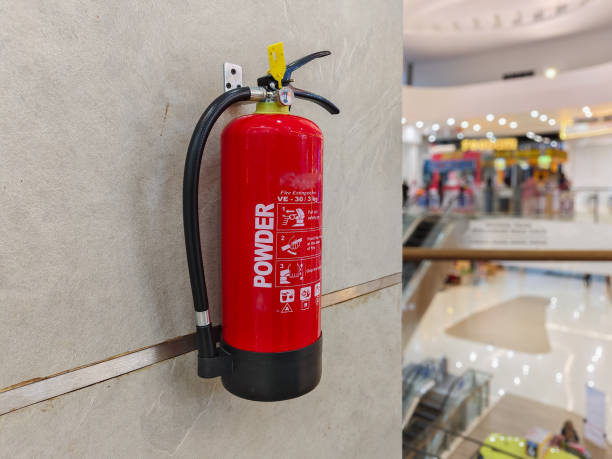
Hospitality venues and commercial kitchens operate with a higher fire risk than many other business environments. Cooking oils, deep fryers, open flames, electrical appliances, extraction systems, grease build-up, paper packaging, cleaning chemicals & staff movement all increase the need for suitable fire protection equipment.
For restaurants, cafés, takeaway shops, hotels, pubs, catering kitchens, food courts & commercial cooking facilities, fire protection should not be treated as a basic compliance item. It is part of daily operational safety, asset protection, staff training & business continuity.
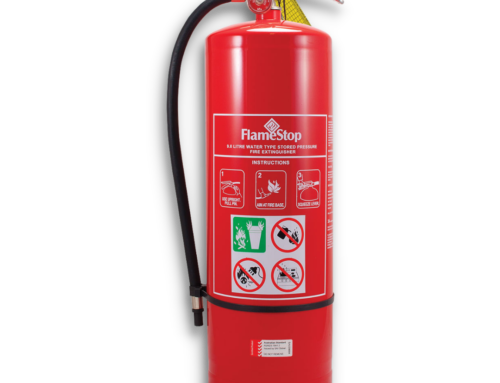
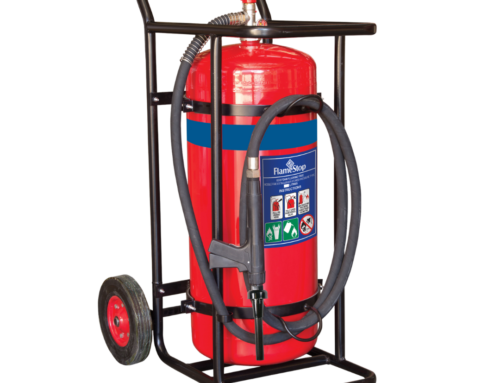
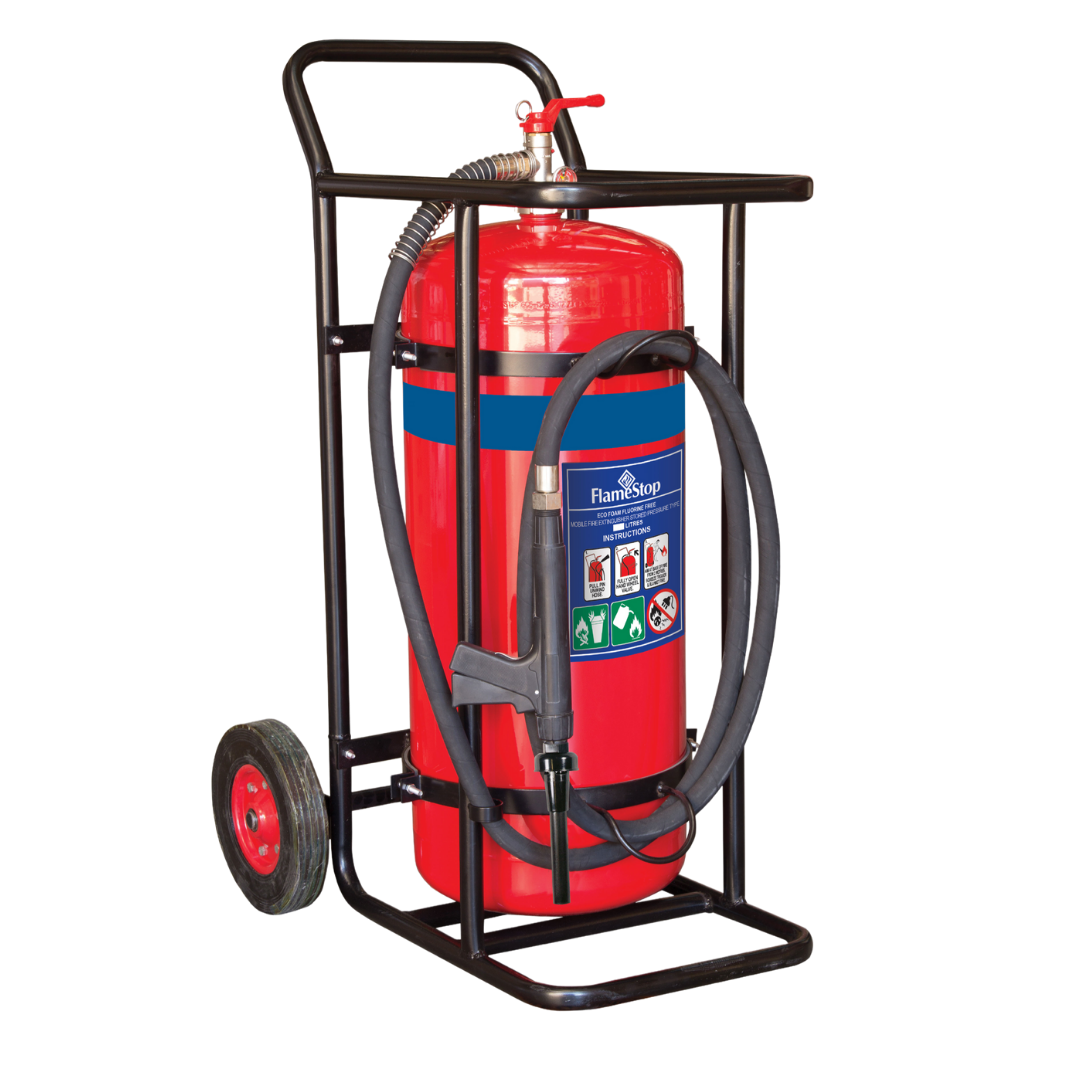
Businesses looking for fire extinguishers Perth should understand which equipment is suitable for kitchen environments, where it should be placed, and how routine maintenance supports compliance & readiness.
Why Commercial Kitchens Need Specific Fire Extinguishers
Commercial kitchens are not the same as general office, retail or warehouse spaces. The main fire risk often comes from hot cooking oils & fats, which require specific fire suppression equipment.
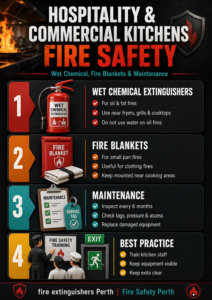
A standard water extinguisher should not be used on burning oil or fat, as it can spread the fire and create further danger. Wet chemical extinguishers are designed for Class F fires involving cooking oils & fats, making them a key safety requirement in many hospitality kitchens. Commercial kitchen fire risks should be assessed under Australian fire equipment selection & location guidance, including AS 2444, while routine servicing is generally aligned with AS 1851.
Wet Chemical Fire Extinguishers in Hospitality Kitchens
Wet chemical fire extinguishers are designed to control cooking oil & fat fires by cooling the fire and helping form a barrier over the burning surface. This helps reduce the chance of re-ignition when used correctly.
Wet chemical extinguishers are commonly used near:
Commercial deep fryers
Cooking ranges
Grills
Woks
Hot plates
Fryer banks
Food preparation zones using heated oils or fats
These extinguishers are especially relevant for restaurants, fish & chip shops, fast food venues, hotel kitchens, commercial caterers, aged care kitchens, school canteens & food production areas.
The extinguisher must be accessible, correctly signed, installed in a suitable location & matched to the kitchen’s risk profile. Placement should avoid locations where staff would need to move through heavy smoke, flames or blocked paths to access the equipment.
Fire Blankets for Small Kitchen Fires
Fire blankets provide another important layer of fire protection in hospitality kitchens. They are commonly used for small contained fires, including pan fires or fires involving clothing.
A fire blanket may assist when a fire is still small, localised & safe to approach. It should be mounted in a visible, accessible position close to the cooking area, but not directly over a high-risk appliance where fire could block access.
Fire blankets should be considered for:
Small pan fires
Cooking flare-ups
Clothing fires
Food preparation zones
Training kitchens
Café & restaurant cooking areas
Fire blankets should not replace the need for suitable extinguishers. In commercial kitchens, they work alongside wet chemical extinguishers, emergency procedures, staff training & professional maintenance.
Fire Extinguisher Placement in Commercial Kitchens
Correct placement is critical. Fire extinguishers and blankets must be close enough to be useful, but not placed where staff could be trapped or exposed to unnecessary risk.
Key placement considerations include:
Clear visibility
Accessible mounting height
Suitable signage
Unobstructed access
Distance from likely fire sources
Proximity to exit paths
Protection from damage, grease or tampering
Correct equipment type for each risk area
For hospitality businesses, equipment should be assessed across the entire premises, not only the kitchen. Dining areas, storerooms, electrical switchboards, cool rooms, loading areas, bin storage areas & staff rooms may each require separate risk consideration.
Businesses arranging Fire Safety Perth services should ensure the site is assessed as a working hospitality environment, not as a generic commercial tenancy.
Maintenance Requirements for Fire Extinguishers & Fire Blankets
Fire equipment must be maintained so it remains ready for use. Portable fire extinguishers in commercial buildings are generally required to be inspected & tested under AS 1851, with six-monthly inspections commonly referenced for portable extinguishers.
Routine maintenance usually checks:
Extinguisher location
Accessibility
Signage
Pressure gauge condition
Cylinder condition
Safety pin & tamper seal
Hose or nozzle condition
Service tag
Expiry or test dates
Damage, corrosion or contamination
Fire blankets should also be checked for correct location, visibility, packaging condition, accessibility & service tagging.
In hospitality venues, maintenance is especially important because kitchen environments expose equipment to grease, heat, moisture, impact, staff handling & cleaning chemicals.
Why Maintenance Matters in Busy Hospitality Venues
Commercial kitchens operate under pressure. Staff move quickly, cooking equipment runs for long periods, and service interruptions can affect revenue, customer safety & food production.
A poorly maintained extinguisher may fail when needed. A blocked fire blanket may not be accessible. Missing signage may delay action. An expired service tag may create compliance issues during inspections, lease reviews, insurance checks or safety audits.
Maintenance supports:
Staff safety
Customer safety
Insurance readiness
Workplace compliance
Reduced downtime
Asset protection
Emergency response planning
Kitchen risk management
For businesses sourcing fire extinguishers Perth, supply should be considered together with installation, placement advice, service tagging & scheduled maintenance.
Staff Training & Fire Response Readiness
Fire equipment is only effective when staff understand when and how to use it. Kitchen teams should know the location of extinguishers, fire blankets, exits, isolation switches & emergency procedures.
Training should cover:
Raising the alarm
Calling emergency services
When to evacuate
How to isolate gas or power if safe
When not to fight a fire
How to use a fire blanket safely
Why water must not be used on oil fires
How to identify wet chemical extinguishers
What to do after equipment is discharged
Training is particularly important in venues with casual staff, rotating rosters, night shifts, seasonal workers or high staff turnover.
Fire Extinguisher Perth
Fire Safety Risks Beyond the Cooking Line
A hospitality fire safety plan should include more than extinguishers beside cooking equipment. Many commercial kitchen fires are linked to grease build-up, electrical faults, poor housekeeping, overloaded power points or blocked access routes.
Areas that should be reviewed include:
Kitchen exhaust systems
Deep fryer zones
Gas appliances
Electrical switchboards
Cool rooms
Storage rooms
Waste areas
Packaging storage
Cleaning chemical storage
Emergency exits
Staff corridors
Dining spaces
A practical fire safety setup should align equipment type, placement, staff procedures & maintenance records with the actual risks present across the venue.
Compliance, Records & Business Protection
Hospitality businesses should maintain clear records for fire equipment servicing. Service tags, maintenance reports & inspection records can support compliance checks, insurance reviews, landlord requirements & internal safety management.
Owners, franchise operators, venue managers, facilities managers & strata representatives should ensure that fire protection equipment is not only installed, but also reviewed when the business changes.
A review may be needed when:
A new fryer is installed
The kitchen layout changes
A tenancy is renovated
Cooking volume increases
A new extraction system is added
The venue expands seating or service areas
Equipment is moved, damaged or blocked
A fire risk assessment identifies new hazards
A proactive approach to Fire Safety Perth helps hospitality venues reduce risk, improve readiness & protect daily operations.
Key Takeaways
| Area | Why It Matters |
| Wet chemical extinguishers | Suitable for Class F cooking oil & fat fire risks |
| Fire blankets | Useful for small contained kitchen fires & clothing fires |
| Correct placement | Ensures equipment can be accessed quickly & safely |
| Routine maintenance | Supports compliance, reliability & readiness |
| Staff training | Helps staff respond correctly during early-stage incidents |
| Record keeping | Supports audits, insurance requirements & venue safety management |
Conclusion
In Perth hospitality venues and commercial kitchens require fire protection equipment that matches real kitchen risks. Wet chemical extinguishers, fire blankets, correct placement, routine maintenance & staff awareness all work together to support a safer venue.
For restaurants, cafés, takeaway shops, hotels, pubs, catering kitchens & food service premises, the right fire equipment is not only about compliance. It helps protect staff, customers, property, operations & business continuity.



Leave A Comment