



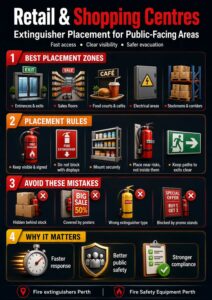
Retail stores & shopping centres have a constant flow of customers, staff, contractors, deliveries & stock movement. This creates a different fire safety environment compared with private workplaces because fire protection must account for public access, clear visibility, evacuation routes, tenant boundaries, shared walkways & high-traffic zones.
Correct extinguisher placement is not only about meeting compliance requirements. It also supports fast response, reduces confusion during an emergency & helps protect people before a fire spreads. For retail operators, centre managers, landlords & facility teams, the placement of Fire extinguishers Perth services should be planned around risk, access, visibility & practical use.
Why Extinguisher Placement Matters in Retail Environments
Shopping centres & retail stores include multiple fire risk areas, including food courts, cafés, electrical rooms, storage rooms, loading docks, kiosks, back-of-house areas & customer-facing sales floors. Each area may require a different extinguisher type depending on the fire risk.
Poor placement can cause delays during an emergency. If an extinguisher is hidden behind stock, positioned too far from a risk area, blocked by displays or placed where customers cannot identify it quickly, the equipment may not be effective when needed.
In public-facing spaces, extinguisher placement must balance accessibility with safety. Equipment should be easy to locate, mounted securely, clearly signed & protected from obstruction or damage.
Public-Facing Areas That Need Careful Planning
Retail environments often have large open spaces, narrow aisles, high foot traffic & changing displays. This means fire equipment placement should be reviewed whenever the store layout changes.
Important public-facing areas include:
- Main sales floors
- Entry & exit points
- Food courts & dining zones
- Customer service counters
- Checkout areas
- Mall walkways
- Escalator & lift lobbies
- Kiosks & temporary retail stands
- Public corridors near amenities
- Shared tenancy access points
These zones must remain clear & accessible. Fire extinguishers should not be placed where customers may trip over them, tamper with them or block emergency access during peak trading periods.
Placement Near Fire Risk Areas
Extinguishers should be positioned close enough to likely fire risks but not so close that staff must move towards danger to reach them. For example, in a retail food tenancy, an extinguisher should be accessible near the kitchen or food preparation area, but not mounted directly above cooking equipment where heat, smoke or flame may prevent access.
Electrical switchboards, server cabinets, lighting control areas & point-of-sale equipment may require extinguishers suitable for electrical fires. Storage areas may require equipment suited to cardboard, packaging & general combustible materials.
A correct placement plan considers:
- The type of fire risk
- The likely user of the extinguisher
- Safe approach routes
- Visibility from normal working areas
- Exit pathways
- Distance from hazards
- Compliance with Australian Standards
Visibility & Signage in Shopping Centres
In public spaces, visibility is critical. Customers, staff & contractors may not know the building layout, so fire extinguishers must be supported by clear signage. Signs should be mounted above or near the extinguisher so the equipment can be found quickly, even when people are moving through crowded areas.
In shopping centres, signage may also need to align with tenancy fit-outs, centre design rules & safety compliance requirements. However, branding or visual presentation should never reduce the visibility of fire equipment.
Extinguishers should remain visible from normal traffic paths. They should not be hidden behind promotional displays, shelving, plants, furniture, temporary signage or seasonal merchandising.
Placement Around Store Displays & Merchandising
Retail layouts change frequently. Promotional stands, sale tables, mannequins, product bins & seasonal displays can easily block access to extinguishers. This is a common issue in fashion stores, electronics shops, pharmacies, supermarkets & homeware retailers.
Store managers should include extinguisher access in visual merchandising checks. Any display that blocks fire equipment, emergency signage or evacuation access should be moved immediately.
A practical retail safety check should confirm that:
- Extinguishers are visible
- Access is not blocked
- Signage is not covered
- The unit is mounted securely
- The inspection tag is visible
- Staff know where the nearest extinguisher is located
Food Courts, Cafés & Cooking Tenancies
Food courts & hospitality tenancies create specific fire risks due to cooking oils, electrical appliances, gas equipment, extraction systems & high customer density. Extinguisher placement in these areas should be planned with the cooking process, customer seating, staff movement & emergency exits in mind.
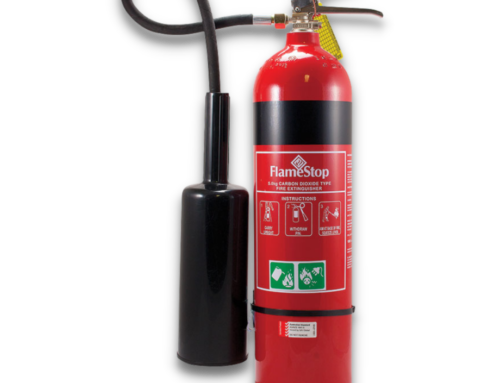
Wet chemical extinguishers may be required for cooking oil risks, while carbon dioxide or dry powder extinguishers may be needed for electrical equipment. Fire blankets may also be required in food preparation areas.
For centre managers, consistent placement rules across food tenancies help create safer shared spaces. Each tenancy should have suitable equipment, while common areas should also be assessed for broader public safety requirements.
Fire extinguisher Perth
Shared Areas & Tenancy Boundaries
Shopping centres often include both common property areas & individual leased tenancies. Fire safety responsibility may be shared between the centre owner, facility manager, landlord & tenant. This makes clear documentation important.
Extinguisher placement should define which equipment belongs to each tenancy & which equipment supports the wider shopping centre. Common areas may include walkways, loading docks, public amenities, service corridors, plant rooms & car park access points.
A documented fire equipment register can help confirm:
- Equipment location
- Extinguisher type
- Service dates
- Responsible party
- Inspection status
- Replacement requirements
- Access issues
Staff Training & Public Safety
Correct placement is only useful when staff know where equipment is located & when it should be used. Retail staff should understand the location of extinguishers in their tenancy, the nearest emergency exits & the importance of raising the alarm before attempting to respond to a fire.
Staff should also understand that extinguishers are intended for small, early-stage fires only. In public-facing environments, evacuation, emergency communication & customer safety must remain the priority.
Training should cover:
- How to identify extinguisher types
- Where equipment is located
- When not to use an extinguisher
- How to report blocked access
- Evacuation procedures
- Emergency contact steps
Maintenance & Inspection Requirements
Extinguishers in retail environments are exposed to heavy customer movement, accidental knocks, dust, cleaning equipment, trolley traffic & layout changes. Regular inspection is necessary to ensure equipment remains accessible, charged, tagged & compliant.
Routine servicing should check the extinguisher condition, pressure, signage, brackets, location, accessibility & service records. Any missing, damaged or discharged equipment should be addressed immediately.
Businesses arranging Fire Safety Equipment Perth support should ensure that servicing includes both the equipment itself & the practical suitability of its location.
Common Extinguisher Placement Problems in Retail Spaces
Retail & shopping centre environments often face recurring placement issues, including:
- Extinguishers hidden by stock
- Equipment blocked by promotional displays
- Signage covered by branding or posters
- Extinguishers placed too far from risk areas
- Units mounted in areas with poor visibility
- Equipment located behind locked doors
- Incorrect extinguisher type for the fire risk
- Inspection tags not visible
- Shared areas not clearly assigned
- Layout changes not reflected in the fire plan
These issues can reduce emergency response effectiveness & create compliance risks for the business or property manager.
Planning Extinguisher Placement for Retail Compliance
Retail fire safety planning should be completed by competent professionals who understand public-facing environments, Australian Standards, tenancy layouts & different fire risk categories.
A site assessment should consider the full retail setting, including entrances, walkways, customer zones, stockrooms, loading areas, kitchens, electrical infrastructure, offices, amenities & shared building services.
For businesses reviewing Fire extinguishers Perth requirements, the focus should be on practical placement, correct extinguisher selection, clear signage, compliant servicing & staff awareness.
Final Thoughts
Extinguisher placement in retail stores & shopping centres must support fast access, clear visibility & safe emergency response. Public-facing areas need particular attention because customers may be unfamiliar with the site, displays may change regularly & staff must manage both fire response & evacuation priorities.
By planning placement around risk areas, traffic flow, signage, tenancy responsibilities & maintenance schedules, retail operators can improve compliance & public safety. Professional Fire Safety Equipment Perth services help ensure extinguishers are correctly selected, positioned, inspected & ready for use when needed.



Leave A Comment