


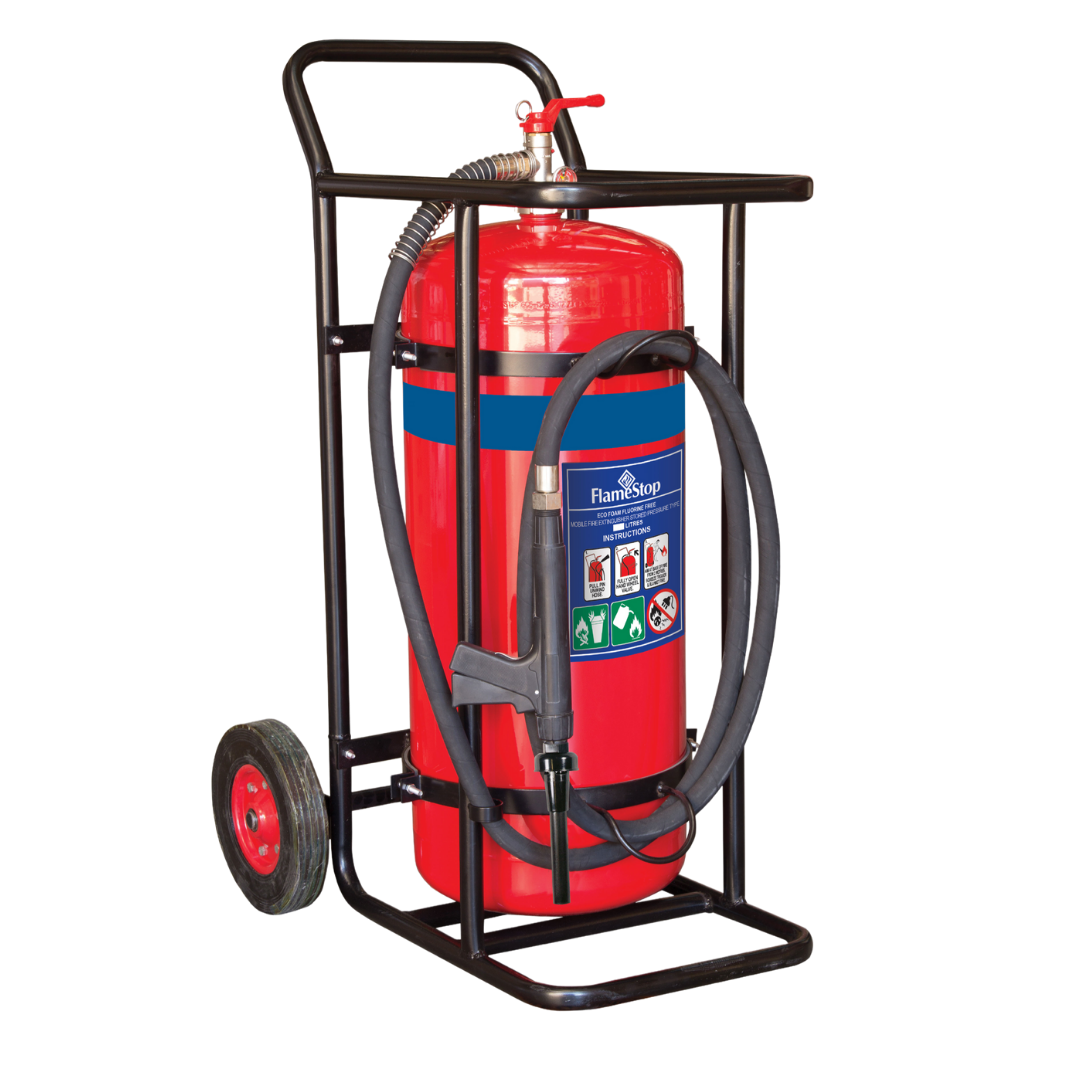
Selecting the correct fire extinguisher type is a practical safety decision. Extinguishers are built to target specific fire classes, and using the wrong agent can escalate risk, increase damage, or create electrical hazards. For workplaces, strata sites, retail tenancies, warehouses, and homes, consistent extinguisher selection supports faster first response, clearer staff confidence, and smoother compliance management. In local procurement, Fire Extinguishers Perth are often specified alongside signage, placement requirements, and routine servicing to keep units ready when needed.
Fire classes in simple terms
Most extinguisher decisions come down to the fuel involved:
- Class A: ordinary combustibles (paper, cardboard, timber, textiles)
- Class B: flammable liquids (petrol, solvents, paints, oils)
- Class C: flammable gases (LPG, propane, methane)
- Class E (electrical): energised electrical equipment (switchboards, appliances)
- Class F: cooking oils and fats (commercial kitchens)
Extinguishers do not “cover everything”. Sites typically need a mix, positioned to match the risk profile of each area.
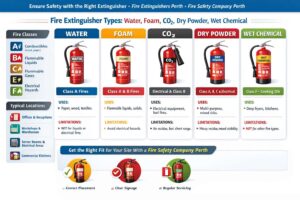
Water extinguishers
Best for: Class A fires (paper, wood, textiles).
Where they fit: offices with paper storage, corridors, classrooms, general building areas with low electrical exposure.
Key limitations: water must not be used on flammable liquids, cooking oils, or energised electrical equipment. Even where electrical isolation is possible, water is rarely the preferred option around switchboards or plant rooms.
What to check: correct rating for the area, clear access, and staff awareness that it is for Class A only.
Foam extinguishers
Best for: Class A and Class B (solids and flammable liquids).
Where they fit: workshops, loading docks, vehicle bays, plant areas, and storage zones where liquids (paint, fuels, solvents) are present.
Practical benefit: foam blankets the fuel surface, which helps suppress vapours and reduce re-ignition on liquid fires.
Key limitations: foam is not suitable for cooking oil fires and is not intended for use on energised electrical equipment unless clearly rated and applied correctly. Site risk assessments should treat electrical proximity as a decision point.
CO₂ extinguishers
Best for: electrical equipment and Class B liquids in contained areas.
Where they fit: server rooms, comms cabinets, switchboard zones, office equipment clusters, and light industrial electrical bays.
Practical benefit: CO₂ leaves no residue, reducing clean-up needs around sensitive equipment.
Key limitations: CO₂ has limited cooling, so re-ignition is possible if the fuel remains hot. In open or windy areas, it can disperse quickly and lose effectiveness. Operators also need to be aware of discharge noise and cold-burn risk from the horn.
Dry powder extinguishers (ABE / BE)
Best for: multi-risk coverage, commonly Class A, B, C, and electrical (depending on specification).
Where they fit: vehicles, workshops, warehouses, construction sites, and general-purpose placements where mixed hazards exist.
Practical benefit: rapid knockdown effect and broad applicability across common risks.
Key limitations: powder residue can be disruptive in offices, retail environments, or around electronics and mechanical assets. Post-discharge clean-up can be extensive, and powder can reduce visibility in enclosed spaces during use. If the site has sensitive equipment, consider whether CO₂ or other options better match the risk area.
Wet chemical extinguishers
Best for: Class F (cooking oils and fats), and often provides additional capability for Class A in kitchen-adjacent areas (check the label rating).
Where they fit: restaurants, cafés, aged-care kitchens, childcare centres, and any site using deep fryers or high-volume cooking oils.
Practical benefit: wet chemical cools and creates a soapy layer that suppresses vapours, reducing flare-ups and re-ignition risk typical of oil fires.
Key limitations: it is not a replacement for other extinguisher types across the broader premises. Kitchens often need wet chemical plus CO₂ (for electrical appliances) and additional units for nearby Class A materials.
Fire extinguishers Perth
Matching extinguisher type to real site zones
A practical way to specify extinguishers is by area:
- Office & reception: water or foam for Class A coverage, plus CO₂ near electrical equipment where appropriate
- Electrical rooms & comms areas: CO₂ as a primary response option, with clear isolation procedures
- Workshops & warehouses: dry powder for mixed risks, with foam where flammable liquids are present
- Commercial kitchens: wet chemical for cooking oils, plus adjacent coverage for Class A materials and suitable options for electrical appliances
This is where a Fire safety company in Perth adds value by aligning extinguisher selection with placement, signage, and service schedules, rather than treating extinguishers as standalone items.
Ratings, placement, and readiness checks that matter
Beyond type, decision-makers should confirm:
- Labelled fire class suitability and the numerical rating (capacity to control a fire under test conditions)
- Mounting height, accessibility, and travel distance to the nearest unit for each risk area
- Clear identification signage so users do not waste time choosing
- Inspection tags and servicing intervals so pressure, seals, and components remain serviceable
Sites that manage Fire Extinguishers Perth across multiple locations typically standardise unit types by zone to reduce confusion and training load.
When a mixed-extinguisher approach is necessary
Many premises carry more than one hazard type: paper storage near electrical equipment, workshops with solvents, or kitchens adjacent to general storage. A single “general-purpose” option can create compromises. A staged approach—correct unit for each zone, consistent signage, and regular servicing—reduces uncertainty and supports faster first response.
For organisations balancing compliance, staff readiness, and asset protection, engaging a Fire safety company Perth is often the most direct way to ensure extinguisher type, placement, and ongoing service records align with the site’s actual risks.




Leave A Comment