


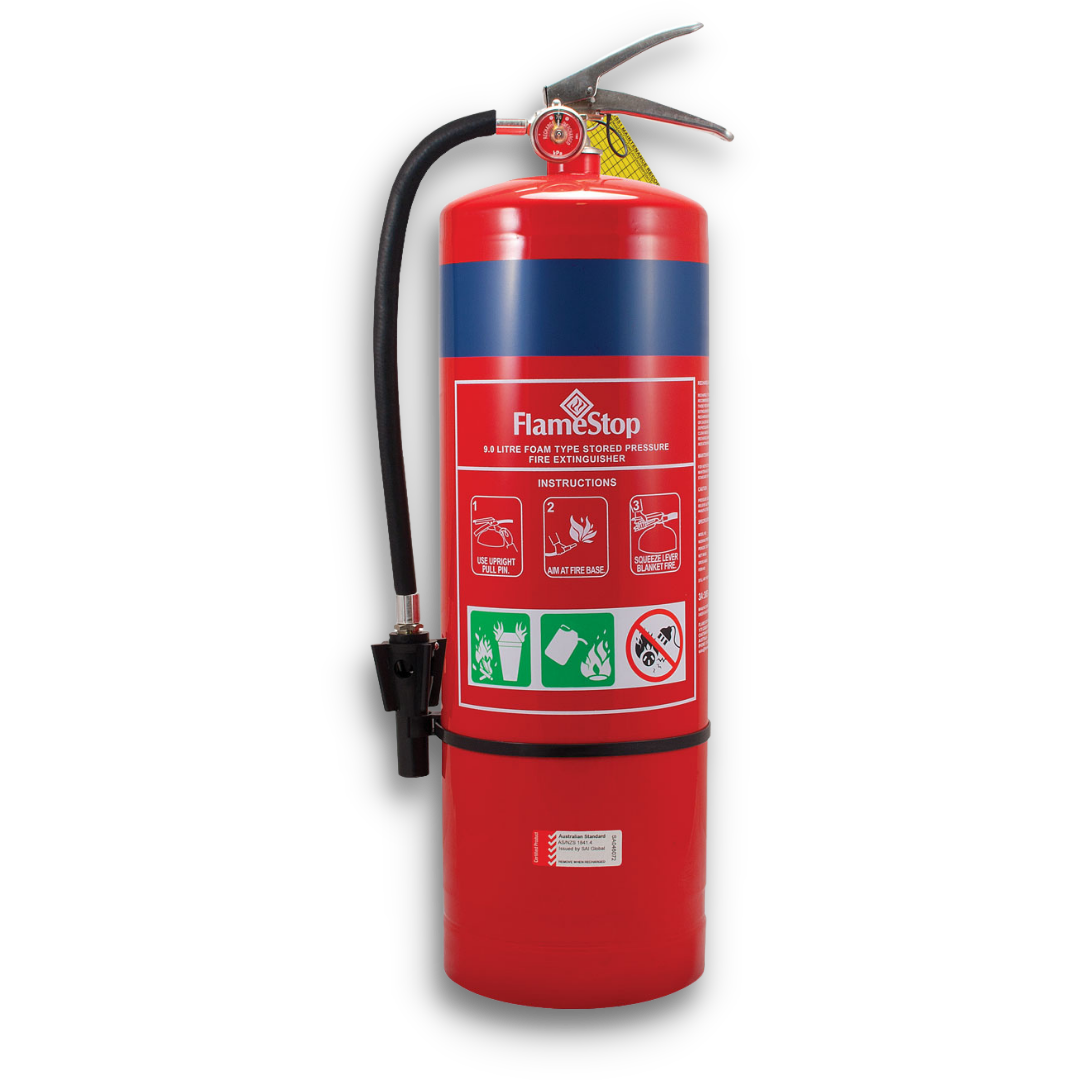
Understanding extinguisher classifications is fundamental to compliant risk management. Whether you manage a warehouse, office, retail site or industrial facility, selecting correctly rated units reduces exposure to property damage, operational disruption and compliance breaches. Businesses sourcing Fire Extinguishers Perth suppliers often focus on type and size, yet the rating label itself provides the most critical information about performance capability.
This guide explains what ratings such as 2A:10B:E mean, how testing determines those numbers, and how to match extinguisher labels to real-world fire risks.
Why Ratings Matter in Workplace Compliance
Australian standards require extinguishers to be suitable for the class and scale of fire risk present. A unit may look adequate in size, but without the correct rating, it may not control the anticipated fuel load. During audits or incident investigations, regulators assess whether installed units were correctly specified based on hazard identification.
Understanding the label supports:
• Accurate hazard alignment
• Risk-appropriate placement
• Insurance compliance
• Reduced operational downtime
Facilities investing in compliant fire safety equipment Perth distribution should treat ratings as performance data, not just product markings.
Breaking Down Fire Classes
Extinguisher ratings correspond to specific fire classes. In Australia, the primary classifications include:
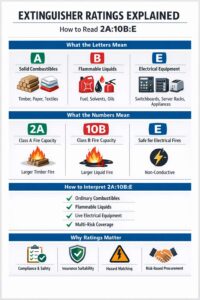
Class A – Ordinary combustibles such as paper, timber and textiles
Class B – Flammable liquids including fuels and solvents
Class C – Flammable gases
Class D – Combustible metals
Class E – Electrically energised equipment
Class F – Cooking oils and fats
The letter in the rating confirms suitability for that fire type. The number preceding certain letters represents tested extinguishing capacity.
What Does “2A” Mean?
The “A” rating applies to solid combustible materials. The number indicates the extinguisher’s relative firefighting capacity under controlled testing conditions.
For example:
• 1A = baseline performance
• 2A = approximately double the extinguishing capability of 1A
Testing involves extinguishing a standardised timber crib fire. The larger the crib successfully extinguished, the higher the numerical rating. A 4A unit can suppress a larger test fire than a 2A unit.
For warehouses storing palletised goods, paper archives or timber stock, a higher “A” rating directly correlates with greater suppression potential.
What Does “10B” Mean?
The “B” rating relates to flammable liquids. The number represents the approximate size (in square metres under testing protocols) of a liquid fuel surface fire that the extinguisher can control.
For example:
• 5B = smaller flammable liquid test fire
• 10B = larger flammable liquid test fire
• 20B = even greater suppression capacity
In environments storing fuels, solvents or lubricants, selecting adequate B ratings is essential. Under-rated extinguishers may not control surface spread effectively.
What Does “E” Mean?
The “E” classification indicates suitability for use on electrically energised equipment. Importantly, there is no numerical rating attached to “E.” Instead, it confirms the extinguishing agent is non-conductive and safe to use on live electrical systems.
This is critical in:
• Server rooms
• Switchboards
• Manufacturing control panels
• Commercial kitchens
Electrical risks require agents such as CO₂ or dry chemical powder that will not transmit current.
Understanding Multi-Class Ratings
A label such as 2A:10B:E indicates:
- Suitable for Class A combustibles
• Suitable for Class B flammable liquids
• Safe for electrically energised equipment
Multi-class extinguishers provide broader application coverage, making them common in commercial premises where mixed risks exist.
When reviewing stock from Fire Extinguishers Perth providers, confirm the rating aligns with your documented hazard assessment rather than relying on generic “all-purpose” descriptions.
Fire Extinguishers Perth
How Ratings Are Determined
Extinguisher ratings are not arbitrary. They are assigned following controlled laboratory testing in accordance with recognised standards. Each class involves specific fire load simulations.
For example:
• Class A testing uses timber crib structures
• Class B testing uses measured fuel pans
• Electrical suitability testing confirms non-conductivity
These tests ensure performance consistency across manufacturers. However, real-world outcomes still depend on correct deployment and early intervention.
Matching Ratings to Workplace Risk
When interpreting extinguisher labels, consider:
- Fuel load quantity – Larger storage areas require higher ratings.
- Fire growth rate – Rapid-spread liquids require stronger B capacity.
- Electrical infrastructure – Data centres require reliable E classification.
- Occupancy density – Public buildings demand clearly marked, adequate units.
Facilities installing fire safety equipment Perth wide should ensure extinguisher placement supports evacuation routes and aligns with floor-plan risk mapping.
Common Misinterpretations
Mistake 1: Bigger cylinder equals higher rating
Physical size does not always correspond proportionally to rating.
Mistake 2: “E” means electrical fires only
“E” confirms suitability on live equipment but does not replace A or B coverage.
Mistake 3: One extinguisher fits all risks
Different areas within the same building may require varied ratings.
Strategic Considerations for Businesses
Professional risk planning involves more than meeting minimum compliance. Businesses should evaluate:
- Future expansion of combustible storage
• Changes in operational processes
• Introduction of lithium battery storage
• Insurance-driven compliance thresholds
Periodic reassessment ensures ratings remain aligned with operational reality.
Conclusion
Extinguisher labels provide measurable performance data. A rating such as 2A:10B:E is a concise technical summary of capacity and suitability. For business operators, safety managers and facility supervisors, understanding these markings improves procurement decisions, strengthens compliance posture and enhances emergency preparedness.
Rather than selecting extinguishers based on type alone, review the rating carefully, align it with documented hazards, and ensure placement reflects operational risk exposure. Correct interpretation of extinguisher ratings is not simply a technical detail—it is a core component of structured fire risk management.



Leave A Comment