


Fire extinguishers are engineered to operate under specific environmental conditions. Improper storage exposes units to temperature extremes, UV degradation, pressure instability, and corrosion, all of which can compromise performance at the point of use. Understanding correct storage requirements is essential for maintaining compliance, reliability, and readiness across residential, commercial, and industrial environments.
Why Storage Conditions Matter
Fire extinguishers are pressurised devices. Their internal pressure, chemical composition, and mechanical integrity are influenced by environmental exposure. When stored incorrectly, extinguishers may experience reduced discharge performance, leakage, or complete failure during activation. Businesses managing Fire Extinguishers Perth must ensure storage practices align with safety standards to avoid operational risk and regulatory non-compliance.
Heat Exposure & Temperature Limits
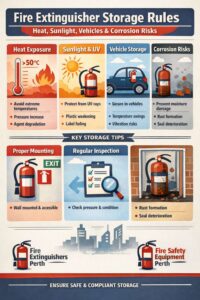
Excessive heat is one of the most critical threats to extinguisher integrity. Most extinguishers are rated for storage between -20°C and 50°C, depending on the type. Exposure beyond this range can lead to:
- Increased internal pressure, risking valve failure
- Degradation of extinguishing agents
- Warping or weakening of cylinder materials
Areas such as plant rooms, rooftops, and enclosed spaces without ventilation often exceed safe temperature limits. For Fire Safety Equipment Perth, maintaining controlled environments ensures consistent performance and extends equipment lifespan.
Sunlight & UV Degradation
Direct sunlight introduces both heat and ultraviolet (UV) exposure. Over time, UV radiation can:
- Weaken plastic components such as hoses and handles
- Fade or damage operating instructions and labels
- Accelerate material fatigue
Extinguishers stored outdoors must be shielded using protective cabinets or covers designed to block UV exposure. Clear and legible instructions are critical for safe operation, particularly in emergency scenarios.
Vehicle Storage Risks
Storing fire extinguishers in vehicles presents unique challenges. Vehicles are subject to rapid temperature fluctuations, vibration, and limited ventilation. These conditions can result in:
- Pressure instability due to heat buildup in parked vehicles
- Loosening of components caused by constant movement
- Increased risk of accidental discharge or damage
If extinguishers must be stored in vehicles, they should be secured in brackets, kept away from direct sunlight, and regularly inspected. Organisations handling mobile operations, including transport and field services, must account for these risks when deploying Fire Extinguishers Perth across fleets.
Fire extinguishers Perth
Moisture & Corrosion Exposure
Corrosion is a gradual but significant threat, particularly in coastal, industrial, or high-humidity environments. Moisture exposure can lead to:
- Rust formation on cylinders and valves
- Compromised seals and pressure loss
- Structural weakening of the extinguisher body
Corrosion often develops unnoticed until it affects performance. Proper storage includes keeping extinguishers off the ground, away from water sources, and within dry, ventilated spaces. For businesses sourcing Fire Safety Equipment Perth, selecting corrosion-resistant models and protective enclosures is a practical risk mitigation strategy.
Mounting, Accessibility & Compliance
Correct mounting plays a key role in both storage and usability. Extinguishers should be:
- Mounted on walls or brackets at accessible heights
- Positioned along exit routes and high-risk areas
- Clearly visible with unobstructed access
Storage must comply with relevant Australian Standards, including requirements for signage, placement, and maintenance intervals. Accessibility is not only a compliance issue but also a functional necessity during emergencies.
Inspection & Maintenance Considerations
Storage conditions directly impact inspection outcomes. Regular checks should assess:
- Pressure gauge readings
- Physical condition, including signs of corrosion or damage
- Integrity of hoses, seals, and safety pins
Environmental exposure often accelerates wear, requiring more frequent inspections in high-risk locations. Maintaining accurate service records ensures accountability and supports compliance with workplace safety regulations.
Conclusion
Fire extinguisher performance depends not only on correct selection but also on controlled storage conditions. Heat, sunlight, vehicle environments, and moisture exposure all introduce measurable risks that can compromise safety outcomes. By implementing structured storage practices, businesses protect both their assets and occupants while ensuring equipment remains compliant and operational. Proper handling of Fire Extinguishers Perth and broader Fire Safety Equipment Perth is a fundamental component of an effective fire protection strategy.



Leave A Comment