


Home kitchens present a specific fire risk because cooking oils, fats, overheated pans, gas flames, electrical appliances, and combustible packaging can all contribute to fast-moving incidents. Choosing the right extinguisher is not simply a matter of having any unit on hand. The extinguisher must match the type of fire most likely to occur near a cooktop or deep fryer, especially where cooking oil is involved.
For households reviewing Fire extinguishers Perth options, the key issue is understanding that not all extinguishers are suitable for kitchen use. A unit that works well on paper, timber, or general rubbish may be dangerous or ineffective when used on burning oil.
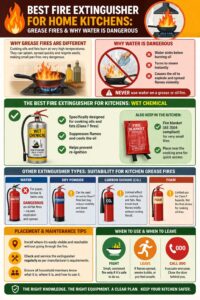
Why Grease Fires Behave Differently
A grease fire develops when cooking oil or fat is heated beyond its safe operating range and ignites. Unlike many ordinary household fires, the fuel source is a hot liquid. That matters because liquid oil can splash, spread, and continue burning across a wider surface area if disturbed.
In practical terms, a small pan fire can become a room fire very quickly if the flames are fed by oxygen, moved across a benchtop, or spread onto cabinetry, curtains, or clothing. The high heat output of burning oil also makes kitchen fires more dangerous to approach than many people expect.
Why Water Is Dangerous on a Grease Fire
Water should never be used on burning cooking oil or fat. Western Australia’s Department of Fire and Emergency Services states that using water on a fat or oil fire causes the fat to explode and the fire to spread. It also advises keeping a fire blanket near the kitchen and, where safe, turning off the stove before evacuating and calling 000.
The reason is straightforward. Water sinks below burning oil, rapidly turns to steam, and forces burning oil upward and outward. That creates a violent flare-up that can project flames across the kitchen, onto the cook, and into surrounding surfaces. This is why a jug of water, a damp cloth, or a splash from the sink can turn a controllable incident into a severe burn and property-loss event.
The Best Fire Extinguisher for a Home Kitchen
For grease fires involving cooking oils and fats, the most suitable extinguisher is generally a wet chemical extinguisher. Fire and Rescue NSW’s extinguisher guidance lists wet chemical as an extinguishing medium to be considered for Class F fires, which include cooking oils and fats such as dripping, butter, and olive oil.
Wet chemical extinguishers are designed for high-temperature cooking media. Rather than simply blasting the flames, they suppress the fire in a way that is better suited to burning oils and fats. In home kitchens, that makes them the preferred extinguisher type where the main concern is a stovetop or pan fire.
For many households, the most sensible setup is not just an extinguisher alone, but a kitchen-ready combination of:
- a wet chemical extinguisher
- a compliant fire blanket
- accessible placement near, but not directly above, the cooking area
- clear household understanding of when to fight the fire and when to evacuate
What About Other Extinguisher Types?
Not every extinguisher sold for domestic use is appropriate for kitchen grease fires.
Water Extinguishers
These are suitable for some Class A fires such as paper, timber, and fabric, but they are not appropriate for burning oils or fats. In a kitchen grease fire, they introduce a severe spread risk. DFES explicitly warns against using water on fat or oil fires.
Dry Powder Extinguishers
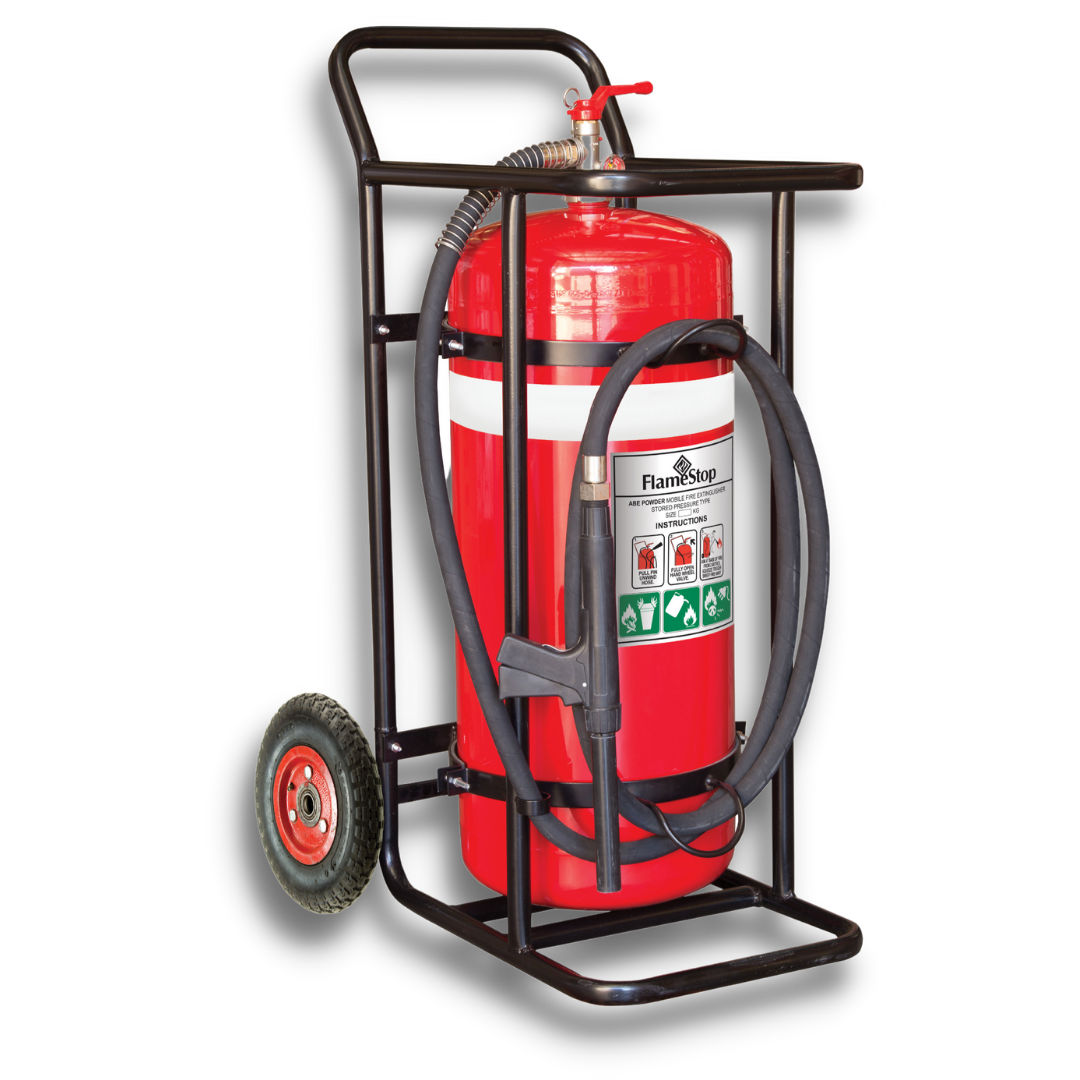
Some powder extinguishers are marketed for broad household coverage. Fire and Rescue NSW notes that certain powder types can be considered for Class F fires, but wet chemical remains the more purpose-suited option for cooking oils and fats. Powder can also reduce visibility and leave significant residue, which may complicate clean-up and appliance recovery.
Carbon Dioxide Extinguishers
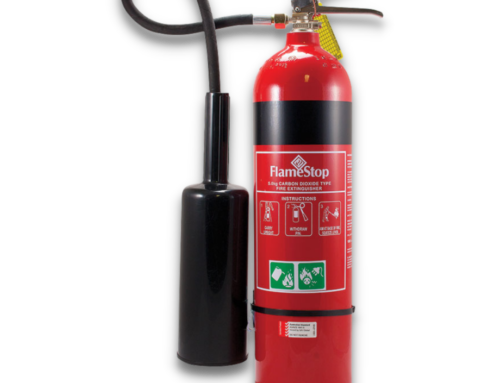
CO₂ extinguishers are commonly associated with electrical risks, but they have limited application for cooking oils and fats. They may temporarily knock back visible flame without adequately controlling the hot oil itself, increasing the risk of re-ignition. Fire and Rescue NSW lists carbon dioxide for Class F only as limited.
Foam Extinguishers
Foam also has limited use around Class F hazards. It is not generally the first-choice recommendation for a home kitchen where burning oil is the main concern.
Where a Fire Blanket Fits In
A fire blanket is highly relevant in kitchen safety. DFES advises keeping a fire blanket close by, carrying the Australian Standards mark AS 3504, and storing it in or adjacent to the kitchen for easy access. DFES also notes that, in the first few seconds of ignition, a fire blanket may be used if the person knows how to use it.
For a small contained pan fire, a fire blanket can be effective because it helps smother the flames by reducing oxygen. However, it is most suitable only when the fire is still small, the person can act immediately, and the blanket can be applied without placing the user in direct danger.
Placement Matters in Kitchen Fire Safety
An extinguisher is only useful if it can be reached quickly without forcing someone through the fire. Kitchen extinguishers should therefore be installed close enough for fast access, but not so close to the cooktop that a person would need to lean into flames to get them.
Households evaluating fire safety Perth priorities should think beyond product purchase alone. The practical questions are:
- Can the extinguisher be reached without crossing the hazard?
- Is it visible to all adult occupants?
- Does everyone know what it is for?
- Has it been maintained according to its service requirements?
- Is there a clear exit path if suppression fails?
These factors often determine whether the extinguisher helps or becomes unusable at the critical moment.
Fire Extinguishers Perth
When to Use an Extinguisher & When to Leave
A home extinguisher is for an early-stage fire only. If flames are spreading beyond the pan, smoke is building rapidly, or the fire is affecting cabinetry, wiring, or extraction systems, the safer decision is evacuation.
DFES advises that if a kitchen fire cannot be safely extinguished, occupants should leave the kitchen, close the door, evacuate everyone, and phone 000. It also warns not to move flaming oil or fat.
This is an important point in domestic fire safety Perth planning. Fire equipment should support safe decision-making, not encourage people to take unnecessary risks in a confined, high-heat environment.
What Households Should Look for When Buying
When selecting a kitchen extinguisher, households should check:
- extinguisher type: wet chemical for cooking oil and fat hazards
- suitability for domestic kitchen placement
- serviceability and compliance labelling
- visibility and mounting practicality
- compatibility with a broader kitchen fire plan including a fire blanket and smoke alarms
For homeowners comparing Fire extinguishers Perth products, the strongest choice is usually the one aligned with the actual kitchen risk rather than the broadest marketing claim.
Final Consideration
The best extinguisher for a home kitchen is one designed for cooking oil and fat fires, properly installed, maintained, and supported by a clear response plan. In most residential kitchens, that points to a wet chemical extinguisher, ideally paired with a compliant fire blanket for very small early-stage incidents.
Kitchen fires escalate quickly, and grease fires are particularly unforgiving. Understanding why water is dangerous, why Class F risks require a different response, and how to position equipment correctly gives households a more reliable basis for protecting people, appliances, and property.


Leave A Comment