



Fire extinguishers are one of the most important first-response tools in any fire protection strategy. Correct placement determines whether a small fire can be contained quickly or allowed to grow into a serious emergency. While many buildings install extinguishers to meet regulatory requirements, effective positioning is equally important for practical fire response. Homes, offices, and retail shops all have different risk areas, which means extinguisher placement should reflect how the space is used and where potential ignition sources exist.
A well-planned extinguisher layout forms part of a broader fire protection strategy that also includes alarms, evacuation planning, and staff awareness. Businesses in Western Australia commonly integrate extinguishers with other Fire safety equipment Perth compliance requirements to ensure workplaces meet safety standards and maintain readiness during emergencies.
General Principles for Fire Extinguisher Placement
Before examining specific environments, several universal principles guide the placement of extinguishers.
First, extinguishers should always be visible and accessible. They should never be hidden behind furniture, locked in cabinets without clear signage, or positioned where people must move obstacles to reach them.
Second, they must be located near likely fire hazards but not so close that the user would be forced into danger to access them. For example, placing an extinguisher directly next to a stove or electrical panel can be ineffective if the fire blocks access.
Third, extinguishers should be installed along normal travel paths such as corridors, exits, or near doorways. This ensures people moving through the building can reach them quickly.
Finally, mounting height and signage must allow quick identification. Most safety standards recommend installing extinguishers at a visible height with clear fire safety signage above the unit.
When businesses purchase Fire Extinguishers Perth, professional installers typically assess building layout, hazard zones, and compliance requirements before recommending installation locations.
Best Locations for Fire Extinguishers in Homes
Although residential fire regulations may be less strict than commercial requirements, proper placement remains essential.
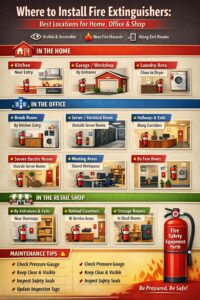
Kitchen
The kitchen is the highest-risk area in most homes due to cooking appliances, oils, and electrical equipment. An extinguisher should be installed near the kitchen entrance rather than beside the stove. This allows a person to reach it safely without approaching the fire directly.
Garage or Workshop
Garages often contain flammable liquids, power tools, and electrical equipment. Installing an extinguisher near the door leading into the house or the main garage entrance ensures quick access when needed.
Laundry Area
Dryers, electrical outlets, and lint buildup can create fire hazards in laundry spaces. A small extinguisher located nearby can provide immediate response capability.
Near Exit Points
Homes with multiple levels or large layouts benefit from having extinguishers positioned near main exits or stairways. These locations allow a person to attempt fire suppression while maintaining a clear escape path.
Fire Extinguishers Perth
Best Locations for Fire Extinguishers in Offices
Office environments contain different fire risks, including electrical equipment, server rooms, and communal kitchens.
Office Kitchens or Break Rooms
Like residential kitchens, workplace kitchen areas present elevated fire risk due to cooking equipment and appliances. Installing extinguishers just outside the kitchen entry allows quick access without entering a hazardous space.
Electrical and Server Rooms
Data centres and equipment rooms contain high electrical loads. These areas should have extinguishers suitable for electrical fires installed nearby, ensuring they can be accessed safely during equipment faults or overheating events.
Corridors and Exit Routes
Extinguishers placed along main corridors ensure employees can reach them quickly. Positioning them near exits provides a safe response location while maintaining evacuation pathways.
Meeting Rooms and Shared Workspaces
Larger offices often include extinguishers positioned between clusters of workstations or shared areas to maintain coverage across the workspace.
In commercial environments, fire safety planning often involves multiple layers of protection. Businesses commonly integrate extinguishers with alarms, evacuation signage, and other Fire safety equipment Perth compliance measures to create a coordinated safety system.
Best Locations for Fire Extinguishers in Retail Shops
Retail shops present unique risks due to electrical displays, storage areas, and customer traffic.
Near Entrances and Exits
Entrances provide quick visibility and access for both staff and emergency responders. Positioning extinguishers near exits also supports evacuation procedures.
Behind Counters or Service Areas
Retail counters often contain electronic systems, charging stations, and point-of-sale equipment. An extinguisher located behind the counter allows staff to respond quickly if equipment overheats or malfunctions.
Storage Rooms
Back-of-house storage areas frequently contain packaging materials, stock, and electrical equipment. These rooms should always have an accessible extinguisher.
Near Electrical Panels
Electrical switchboards or distribution panels represent a critical fire risk. Installing extinguishers nearby allows immediate response if electrical faults occur.
Many retail businesses source Fire Extinguishers Perth through professional fire safety providers who assess store layout and determine the appropriate number and placement of units.
The Importance of Visibility and Maintenance
Even correctly positioned extinguishers can become ineffective if they are poorly maintained or obstructed. Regular inspections ensure units remain charged, accessible, and compliant with safety regulations.
Routine maintenance checks should confirm:
- extinguishers are not blocked by furniture or equipment
• safety pins and seals remain intact
• pressure gauges indicate correct charge levels
• signage remains visible and readable
• inspection tags are up to date
Professional servicing helps ensure extinguishers remain operational and ready for use during emergencies.
Conclusion
Installing extinguishers should never be treated as a simple box-ticking exercise. Instead, placement should reflect the building layout, the types of fire risks present, and how occupants move through the space.
Homes benefit from coverage near kitchens, garages, and exits. Offices require coverage near electrical equipment and communal spaces. Retail environments must balance accessibility for staff with visibility for safety compliance.
When properly positioned and supported by other protective measures, extinguishers form a critical part of a building’s emergency preparedness plan. Thoughtful placement ensures that when a fire occurs, the right equipment is within reach and ready to protect people, property, and business operations.


Leave A Comment