


Fire extinguishers are essential first-response fire protection devices, but they can only perform correctly when they remain pressurised, accessible & in serviceable condition. An extinguisher that appears undamaged may still have internal faults that reduce its discharge range, interrupt the flow of extinguishing agent or prevent operation entirely.
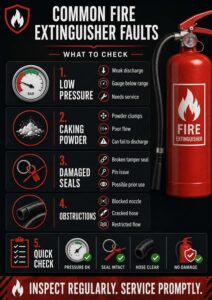
Businesses, property managers, schools, workshops, warehouses & hospitality venues should include extinguishers in a documented inspection and maintenance programme. When arranging Fire extinguishers Perth inspections, four common problems require particular attention: low pressure, caking powder, damaged seals & discharge obstructions.
Why Fire Extinguisher Faults Matter
A portable fire extinguisher is designed for immediate use during the early stage of a fire. There may be little time to locate another unit if the first extinguisher fails.
Even minor faults can affect:
- Discharge pressure
- Agent flow
- Operating duration
- Discharge range
- User control
- Extinguisher reliability
- Compliance records
Regular visual checks can identify obvious damage, but internal faults may require inspection, testing or servicing by a competent fire safety provider.
Low Pressure
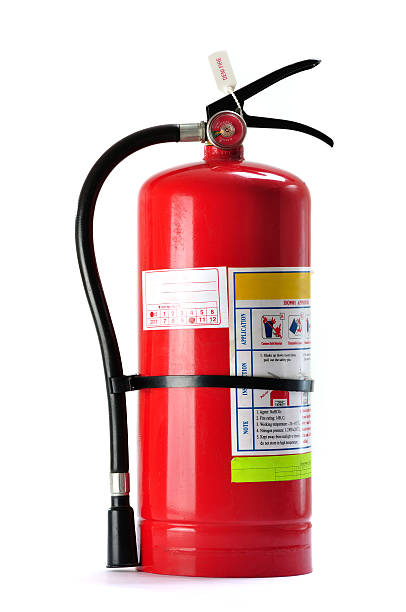
Low pressure is one of the most visible extinguisher faults. Stored-pressure extinguishers usually have a pressure gauge showing whether the cylinder remains within its normal operating range.
If the gauge needle sits outside the green operating zone, the extinguisher may not discharge correctly.
Common Causes of Low Pressure
Pressure loss may result from:
- A leaking valve
- Damaged seals or O-rings
- Corrosion around cylinder fittings
- Accidental partial discharge
- Loose components
- Temperature-related stress
- Age-related deterioration
- Previous use without recharging
An extinguisher may also lose pressure slowly without showing visible external damage.
How Low Pressure Affects Performance
An under-pressurised extinguisher may release only a weak stream of agent. The discharge may not reach the base of the fire or may stop before the cylinder has released its contents.
Possible outcomes include:
- Reduced discharge distance
- Shorter operating time
- Incomplete agent release
- Poor coverage of the burning material
- Failure to control the fire
A pressure gauge provides a useful indication, but it should not be treated as the only confirmation of serviceability. The gauge itself can become damaged, obstructed or inaccurate.
What to Do About Low Pressure
An extinguisher showing low pressure should not simply be returned to its bracket. It should be removed from service and assessed for leakage, valve damage & recharge suitability.
The correct action may include:
- Recharging the extinguisher
- Replacing damaged seals
- Repairing or replacing the valve
- Conducting pressure testing
- Replacing the extinguisher
The cause of the pressure loss should be identified before the unit is returned to service.
Caking Powder
Dry chemical powder extinguishers contain fine extinguishing powder designed to flow through the valve, hose & nozzle during discharge. Over time, powder can compact or form lumps inside the cylinder.
This condition is commonly called caking.
What Causes Extinguishing Powder to Cake?
Powder may become compacted due to:
- Long periods without movement
- Continuous vibration in vehicles
- Moisture entering the cylinder
- Temperature fluctuations
- Poor internal sealing
- Incorrect storage
- Ageing extinguishing agent
- Contamination during servicing
Extinguishers installed in trucks, machinery, mobile equipment or industrial sites may experience more vibration than units mounted in offices.
Why Caking Is a Problem
Dry chemical powder must remain free-flowing. If the powder becomes compacted, it may not move towards the discharge tube when the extinguisher is activated.
Caking can cause:
- Uneven agent discharge
- Blocked discharge tubes
- Reduced flow
- Short bursts followed by stoppage
- Powder remaining inside the cylinder
- Inadequate fire coverage
A gauge may still show normal pressure even when the powder has deteriorated. This means an extinguisher can appear ready for use while still having a serious internal fault.
Can Shaking an Extinguisher Fix Caking?
Manually shaking or striking an extinguisher is not a reliable maintenance solution. It may not break up compacted powder evenly & could damage the gauge, valve or mounting components.
Extinguishers should be handled and maintained according to the applicable inspection and servicing requirements. Suspected powder deterioration should be assessed by a qualified provider.
Preventing Powder Deterioration
The risk of caking can be reduced through:
- Correct mounting
- Protection from moisture
- Routine servicing
- Inspection after exposure to vibration
- Appropriate storage temperatures
- Replacement of deteriorated agent
- Proper refilling procedures
Fire extinguishers installed in vehicles or high-vibration areas may require closer attention than units installed in stable indoor environments.
Fire Extinguishers Perth
Damaged Safety Seals
The tamper seal and safety pin help prevent accidental operation and provide a visible indication that the extinguisher has not been used or interfered with.
A missing or damaged seal should not be ignored.
Causes of Seal Damage
Safety seals can be damaged by:
- Accidental handling
- Deliberate tampering
- Poor installation
- Contact with equipment or stored goods
- UV exposure
- Heat
- Ageing plastic
- Incorrect replacement seals
A broken seal may indicate that the safety pin has been removed or that the extinguisher has been partially discharged.
Why the Seal Must Be Checked
The seal does not hold pressure inside the cylinder, but it is an important inspection indicator. If it is missing, inspectors cannot assume that the extinguisher remains unused.
Further checks may be required to determine whether:
- The safety pin is correctly installed
- The handle has been operated
- The valve has been disturbed
- Pressure has been lost
- The extinguisher has been partially discharged
- The unit has been tampered with
Replacing the seal without investigating the reason for the damage can conceal a more serious fault.
Safety Pin Faults
The safety pin should be straight, correctly positioned & removable during an emergency.
Problems can include:
- Bent pins
- Corroded pins
- Incorrectly fitted pins
- Pins secured by unsuitable material
- Obstructions around the handle
- Pins that are difficult to remove
An extinguisher should not be fitted with wire, cable ties or improvised restraints that make emergency operation more difficult.
Hose & Nozzle Obstructions
The hose, nozzle & discharge outlet must remain clear. An extinguisher can be fully pressurised but still fail if the agent cannot pass through the discharge path.
Common Causes of Obstruction
Blockages may result from:
- Insects or nests
- Dust
- Grease
- Paint
- Powder residue
- Moisture
- Corrosion
- Damaged hose linings
- Foreign objects
- Incorrect hose storage
Extinguishers installed outdoors, in workshops, kitchens or dusty warehouses may face a higher obstruction risk.
Signs of Hose or Nozzle Problems
Visible warning signs include:
- Cracked hoses
- Flattened hose sections
- Loose couplings
- Blocked nozzle openings
- Rust around fittings
- Oil or grease contamination
- Missing nozzle components
- Brittle hose material
Hoses should be secured correctly without sharp bends or crushing.
How Obstructions Affect Discharge
A partial blockage can reduce discharge range & create an irregular spray pattern. A complete blockage may prevent discharge while internal pressure remains in the cylinder.
This can create additional risk because the user may continue squeezing the handles while the extinguisher remains pressurised.
Obstructed discharge components should be inspected, cleaned or replaced using approved parts.
Corrosion & Cylinder Damage
Although low pressure, caking, damaged seals & obstructions are common faults, the cylinder body also requires close inspection.
Warning signs include:
- Rust
- Pitting
- Dents
- Deep scratches
- Bulging
- Damaged welds
- Peeling protective coating
- Chemical contamination
Corrosion can weaken the cylinder and may make the extinguisher unsafe to pressurise.
Units installed near the coast, outdoors, in wet areas or around corrosive chemicals may deteriorate more quickly. Cabinets, weather covers & suitable mounting systems can help protect them.
Damaged Handles, Valves & Gauges
Operating components must remain intact and easy to use.
Inspectors should check for:
- Bent handles
- Loose levers
- Cracked valve components
- Damaged gauges
- Fogged gauge lenses
- Missing gauge needles
- Loose hose connections
- Signs of leakage
An extinguisher with a damaged handle may be difficult to activate. A faulty gauge may provide a misleading pressure reading.
Incorrect Mounting & Restricted Access
An extinguisher may be mechanically serviceable but still ineffective if it cannot be reached quickly.
Common access problems include:
- Furniture blocking the unit
- Stock stored in front of the bracket
- Extinguishers mounted too high
- Missing location signs
- Loose brackets
- Damaged cabinets
- Locked cabinets without suitable access
- Extinguishers removed from designated positions
Effective Fire Safety Perth planning requires extinguishers to remain visible, accessible & positioned for the hazards they are intended to cover.
Signs That an Extinguisher May Have Been Used
A partially used extinguisher must be serviced or replaced, even if it still contains agent.
Possible indicators include:
- Broken tamper seal
- Missing safety pin
- Powder residue around the nozzle
- Pressure loss
- Loose hose
- Damaged handle
- Reduced cylinder weight
- Discharge residue nearby
Dry powder can remain in the valve after even a brief discharge, preventing the valve from sealing correctly. This may lead to gradual pressure loss.
Routine Visual Checks
Workplaces can conduct basic visual checks between scheduled professional inspections.
A visual check should confirm that:
- The extinguisher is in its designated location
- Access is clear
- The pressure gauge appears normal
- The safety pin and seal are intact
- The hose and nozzle are unobstructed
- The cylinder shows no obvious corrosion or damage
- Labels and operating instructions remain legible
- The mounting bracket is secure
- The inspection tag is present
- There are no signs of discharge or tampering
These checks do not replace formal inspection, testing or maintenance.
Documentation & Fault Reporting
Every identified fault should be recorded. Maintenance records help property managers & business owners track recurring problems and confirm that defective equipment has been addressed.
Records may include:
- Extinguisher identification
- Location
- Extinguisher type
- Inspection date
- Fault description
- Corrective action
- Recharge or replacement details
- Service provider information
- Next scheduled inspection
Recurring low pressure or seal damage may indicate poor mounting, tampering or environmental exposure that also needs correction.
When Replacement Is Better Than Repair
Not every extinguisher should be repaired or recharged. Replacement may be more appropriate when:
- The cylinder is badly corroded
- Components are no longer available
- The unit has exceeded its practical service life
- Repair costs are uneconomical
- The extinguisher type no longer matches the hazard
- Labels are unreadable
- The cylinder fails testing
- Damage affects structural integrity
The replacement unit should be selected according to the fire risk, location & operating environment.
Maintaining Reliable Fire Extinguishers
Businesses comparing Fire extinguishers Perth services should look for support that includes inspection, testing, maintenance, recharge, replacement & clear documentation.
A complete maintenance programme should address both visible faults and internal performance risks. Pressure gauges, seals, hoses & cylinder surfaces provide useful information, but internal powder condition and valve performance may require professional assessment.
Effective Fire Safety Perth depends on more than installing equipment. Extinguishers must remain correctly located, properly maintained & ready to discharge when needed.
Low pressure, caking powder, damaged seals & obstructions are preventable risks when businesses use regular inspections, documented servicing & timely replacement. Addressing these faults before an emergency helps protect people, property & workplace operations.



Leave A Comment