



Workplace fire alarms provide an early warning of potential fire hazards, allowing employees, contractors & visitors to respond before conditions become dangerous. However, an effective emergency response depends on more than an operational alarm system. Employees must understand evacuation procedures, recognise emergency signals & know where to assemble after leaving the building.
For Perth businesses, workplace fire safety involves clear emergency plans, accessible evacuation routes, appropriate fire protection equipment & regular employee training. Understanding what to do when a fire alarm activates can reduce confusion, support an orderly evacuation & help emergency personnel account for everyone on site.
Why Employees Must Respond Immediately to a Fire Alarm
When a workplace fire alarm activates, employees should treat it as a genuine emergency unless authorised personnel provide instructions consistent with the site’s emergency procedures.
Delaying evacuation to finish work, collect belongings or investigate the alarm can expose employees to unnecessary risks. Fire conditions can change quickly, particularly in workplaces containing combustible materials, electrical equipment, chemicals or machinery.
Employees should understand that:
- Fire alarms may activate before smoke or flames become visible.
- Smoke can affect visibility & breathing before evacuation routes become inaccessible.
- Fire conditions may spread beyond the area where the alarm originated.
- Delayed responses can interfere with emergency coordination.
- Every alarm requires an appropriate response under the workplace emergency plan.
Businesses that provide fire safety training Perth employees can access help their workforce recognise alarm signals, understand evacuation expectations & respond consistently during emergencies.
1. Stop Work & Prepare to Evacuate
The first action employees should take when an evacuation alarm sounds is to stop their current activity & follow the workplace emergency procedures.
Employees working in offices, retail premises or commercial buildings should avoid unnecessary delays. Personal belongings should only be taken if they are immediately accessible & collecting them does not interfere with evacuation.
In industrial environments, certain machinery or processes may require emergency shutdown procedures. However, these actions should only be undertaken by authorised employees when safe to do so.
Employees should:
- Stop work immediately when instructed to evacuate.
- Follow directions provided by fire wardens.
- Leave personal belongings that could delay evacuation.
- Avoid attempting to investigate the cause of the alarm.
- Use established evacuation procedures for their work area.
The priority is to move away from potential danger without creating additional risks.
2. Follow Designated Emergency Evacuation Routes
Every workplace should have an emergency evacuation plan identifying suitable exits, escape routes & assembly locations.
When an evacuation is required, employees should use the nearest safe designated exit rather than automatically returning through the building’s main entrance.
Emergency exits must remain accessible, clearly identified & free from obstructions.
Important Evacuation Expectations
Employees should:
- Walk calmly towards the nearest safe exit.
- Follow illuminated exit signs & emergency directions.
- Use emergency stairs rather than lifts.
- Avoid routes affected by smoke, flames or other hazards.
- Close doors behind them when safe, without locking them.
- Follow alternative evacuation routes if the primary exit becomes unsafe.
Employees should never enter a smoke-filled corridor or attempt to pass through an unsafe area simply because it is marked as an evacuation route.
Workplaces with multiple floors, storage areas or complex layouts may require additional evacuation instructions to ensure employees can leave safely.
3. Follow Instructions From Fire Wardens
Fire wardens play an important role in workplace emergency management.
Depending on the workplace emergency plan, designated wardens may coordinate evacuation activities, direct employees towards safe exits & report relevant information to emergency responders.
Employees should follow the directions of authorised emergency personnel rather than relying on assumptions about the alarm.
Fire wardens may be responsible for:
- Directing employees towards designated emergency exits.
- Identifying alternative evacuation routes.
- Communicating emergency information.
- Assisting with arrangements for employees requiring additional support.
- Reporting potentially unaccounted-for persons.
- Coordinating information at designated assembly points.
Employees should not return to their workstations or enter restricted areas without authorisation.
Clear communication between workers & fire wardens supports an organised emergency response.
4. Assist Others Without Putting Yourself at Risk
Some employees, contractors or visitors may require assistance during an emergency evacuation.
This may include people with mobility limitations, hearing or vision impairments, temporary injuries or unfamiliarity with the workplace.
Emergency arrangements should identify how these individuals will receive assistance before an incident occurs.
Employees should provide assistance only when it is safe & consistent with their training.
For example, an employee may direct a visitor towards an accessible evacuation route or notify a fire warden that someone requires help.
Employees should not attempt unsafe rescues, carry people down stairs without appropriate training or re-enter hazardous areas.
Where a person cannot evacuate safely, employees should communicate their location to emergency personnel immediately.
5. Communicate Important Emergency Information
Effective communication is essential during workplace evacuations.
Employees who discover smoke, flames, unusual heat or other hazards should report the information to the appropriate emergency contact or fire warden as soon as it is safe.
Information may include:
- The location of visible smoke or fire.
- Blocked emergency exits.
- Employees or visitors requiring assistance.
- Hazardous materials near the affected area.
- Missing employees or contractors.
- Injuries requiring medical attention.
Where there is an actual fire or immediate danger, emergency services should be notified promptly. In Australia, the emergency number is 000.
Employees should not assume that activating a fire alarm automatically means emergency services have been contacted.
Workplace emergency plans should establish who is responsible for contacting emergency services & communicating with responding personnel.
6. Proceed Directly to the Designated Assembly Point
Once employees have evacuated the building, they should proceed to the designated emergency assembly point.
An assembly point is a predetermined location where employees, contractors & visitors gather after leaving the workplace.
These locations should be positioned away from immediate hazards & emergency vehicle access routes.
What Employees Should Do at the Assembly Point
Employees should:
- Report to the nominated assembly location.
- Notify the responsible fire warden or supervisor of their presence.
- Remain with their designated work group where required.
- Report anyone who may still be inside the building.
- Keep access roads & emergency vehicle routes clear.
- Remain at the assembly point until further instructions are provided.
Employees should not leave the assembly area without notifying the responsible person.
Leaving without reporting can create uncertainty during headcounts & may result in emergency personnel searching unnecessarily for someone who has already reached safety.
If the designated assembly point becomes unsafe, employees should follow instructions to move to an alternative location.
7. Account for Employees, Contractors & Visitors
Employee accountability is an important part of workplace evacuation procedures.
After evacuation, responsible personnel should establish whether everyone expected to be on site has reached safety.
Depending on the workplace, this may involve employee attendance records, visitor registers, contractor sign-in systems or designated team headcounts.
Employers should consider how their emergency plan accounts for people working across multiple buildings, outdoor areas or different shifts.
If an employee notices that a colleague is missing, they should report this immediately to the responsible warden.
Employees must not re-enter the building to search for missing people. Emergency responders should receive the relevant information so they can assess the situation.

Fire Extinguishers Perth
8. Never Re-enter the Building Without Authorisation
One of the most important workplace fire safety rules is that employees must remain outside the building until authorised personnel confirm that re-entry is permitted.
Even when an alarm stops sounding, the building may still contain hazards.
Potential risks include residual smoke, damaged electrical equipment, unstable materials or fire conditions that have not been fully assessed.
Employees should not interpret a silenced alarm as permission to return to work.
Re-entry should only occur once the appropriate emergency personnel or authorised workplace representatives have confirmed that it is safe.
Why Workplace Fire Safety Training Matters
Knowing evacuation procedures in theory is different from responding during an actual emergency.
Regular workplace fire safety training helps employees understand their responsibilities & become familiar with the emergency arrangements specific to their workplace.
Training should cover:
- Recognising fire alarm & evacuation signals.
- Identifying primary & alternative escape routes.
- Understanding fire warden responsibilities.
- Locating designated assembly points.
- Reporting emergencies & communicating hazards.
- Assisting people who require evacuation support.
- Understanding the limitations of firefighting equipment.
Businesses arranging fire safety training Perth workplaces require should ensure that training reflects their building layout, operational hazards, workforce arrangements & documented emergency procedures.
Australian workplace health & safety guidance identifies evacuation procedures, assembly points, emergency equipment & appropriate training as important elements of workplace emergency planning.
The Role of Fire Protection Equipment During Workplace Emergencies
Fire protection equipment supports workplace emergency preparedness, but it does not replace the need for evacuation procedures.
Commercial & industrial premises may require different equipment depending on their hazards, building requirements & relevant Australian Standards.
Common workplace fire protection products include:
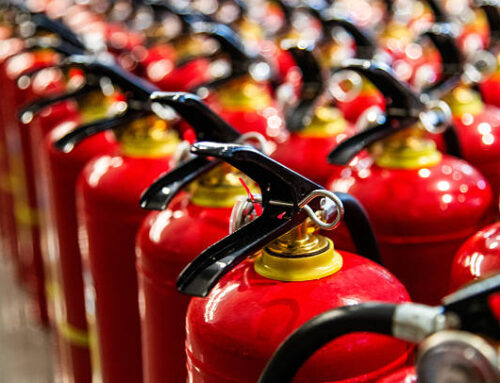
Fire Extinguishers: Suitable extinguishers may be provided for specific fire hazards, including ordinary combustible materials, flammable liquids & energised electrical equipment. Selection must match the risks present.
Fire Blankets: Fire blankets may be suitable for specific small, contained fires where their use is appropriate.
Emergency Lighting: Emergency lighting assists occupants in identifying evacuation routes when normal lighting is unavailable.
Exit Signs: Clearly visible exit signs help direct employees towards designated emergency exits.
Fire Alarm Systems: Detection & warning systems provide occupants with notification of a potential emergency.
An established Fire Equipment Supplier Perth businesses work with can assist with sourcing appropriate fire protection products for commercial premises.
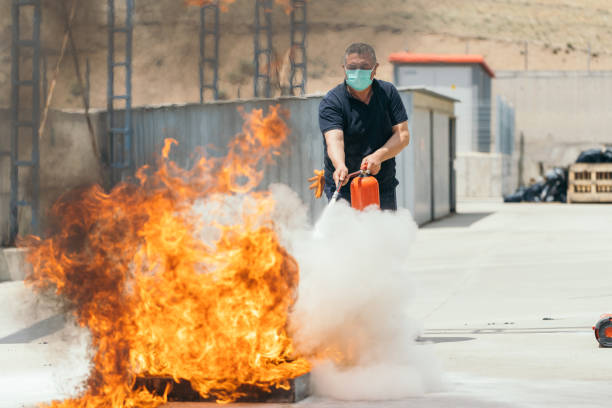
However, employees should not attempt to fight a fire simply because an extinguisher is available. Firefighting should only be considered by appropriately trained personnel, where conditions are safe, the fire is small & contained, and an unobstructed escape route remains available.
Evacuation must remain the priority when conditions are uncertain or dangerous.
Common Mistakes Employees Should Avoid During a Fire Alarm
Workplace fire incidents can become more difficult to manage when employees do not follow established emergency procedures.
Common mistakes include:
Ignoring the alarm: Assuming the alarm is a test or false activation without confirmation can delay evacuation.
Collecting personal belongings: Returning for laptops, mobile phones or personal items creates unnecessary delays.
Using lifts: Lifts should not be used during a fire evacuation unless specifically designated & authorised for that purpose under the emergency plan.
Returning to investigate: Employees should not enter hazardous areas to determine what caused the alarm.
Leaving the assembly point: Departing without reporting can interfere with employee accountability.
Attempting untrained firefighting: Employees without suitable training should not attempt to extinguish a fire.
Re-entering too early: A building should only be reoccupied after appropriate authorisation.
Regular training & emergency drills help businesses identify these behaviours before an actual incident occurs.
How Perth Businesses Can Improve Workplace Evacuation Readiness
Workplace emergency preparedness requires ongoing attention to evacuation arrangements, employee knowledge & fire protection equipment.
Businesses should regularly review whether their existing procedures remain suitable for current operations.
Changes in staffing, building layouts, equipment or business activities may affect evacuation arrangements.
Important considerations include the accessibility of emergency exits, visibility of evacuation diagrams, communication arrangements, employee inductions & the suitability of designated assembly points.
Where employees work with electrical equipment, machinery, flammable liquids or other hazardous materials, emergency plans should address the additional risks associated with these activities.
Working with a Fire Equipment Supplier Perth businesses can consult may also support appropriate equipment selection & replacement when workplace hazards or operational requirements change.
Emergency plans should be maintained, communicated & tested in accordance with applicable work health & safety requirements.
Conclusion
When a workplace fire alarm activates, employees should respond promptly, follow evacuation instructions & move towards the designated assembly point using a safe exit.
Effective emergency management depends on employees understanding their responsibilities, communicating important information & remaining outside the building until authorised to return.
For Perth businesses, regular employee training, documented evacuation plans & appropriate fire protection equipment are essential components of workplace fire safety preparedness.
e Fire and Safety supports Perth businesses with fire safety products, equipment supply & fire safety training. Contact our team to discuss your workplace fire safety requirements & suitable training or equipment options.









Leave A Comment